Search Results
38 results found with an empty search
- Alex Sanchez Rangel | Midwest Workforce Strategies
Alex Sanchez Rangel is a subject matter expert on global immigration for Midwest Workforce Strategies. With a law degree and specialization in immigration law from Universidad Autónoma de Aguascalientes and over 10 years of experience in Global Mobility, Alexis brings a lawyer’s precision to workforce management. Alexis Sánchez Rangel Subject Matter Expert: Global Immigration Specialist Alexis Sánchez Rangel serves as a subject matter expert on global immigration for Midwest Workforce Strategies. With a law degree and specialization in immigration law from Universidad Autónoma de Aguascalientes and over 10 years of experience in Global Mobility, Alexis brings a lawyer’s precision to workforce management. With experience as a Team Leader at Newland Chase México and her work with U.S. Immigration Law Firms, she has gained expertise that spans immigration law, corporate governance, and team leadership, which she leverages to guide leaders through the complex regulatory and structural hurdles that often stall workforce initiatives. Alexis focuses on the Legal, Geographic, and Policy elements of the Workforce Vector and provides strategic insights on expanding your workforce to include immigrants. By leveraging her background in contract review and global mobility, she coaches organizations on removing internal and external barriers to hiring outstanding staff from around the world, ensuring that their new workforce strategies are legally sound and operationally efficient.
- Workforce Element Definitions | Midwest Workforce Strategies
Detailed definitions of the 40 different workforce elements, including individuals with disabilities, immigration, automation, and more. Workforce Element Definitions The Technical Specifications for Every Available Labor Source Employee Output Retention Not in the Labor Force Employed Elsewhere Future Employees Employee Output Retention Employee Output Labor Productivity is real (inflation-adjusted) Gross Domestic Product (GDP) per labor hour. GDP is the value of goods and services attributed to businesses because of their labor and capital investments and how they organize these resources. Labor productivity depends on capital intensity, labor composition, and Total Factor Productivity. Capital Investments – Increasing the output of employees in organizations in the county by investing in intellectual property and equipment. Software and research and development are the primary components of intellectual property. Equipment primarily comprises communication equipment and computers but also includes vehicles and other items. An increase in output is converted to an equivalent number of new employees. Labor Composition – Increasing the output of employees in the county by improving the mix of employees in organizations. Employees can increase output by having better knowledge, skills, education, and experience. Gender also affects output through occupational selections, discrimination, and in other ways. An increase in output is converted to an equivalent number of new employees. Process Improvements (Total Factor Productivity) - T otal Factor Productivity (TFP) is the productivity improvement that results from the combination of labor and capital. Specifically, how effective labor and capital are organized to generate output. Improvements in organizational structure, management systems, and work arrangements lead to increases in TFP. Economies of scale, the degree of alignment and coordination (internally and with suppliers), the degree of capital and labor utilization, the amount of technology adoption, and resource reallocation all affect TFP. Changes to how goods and services are created and delivered can improve TFP by enhancing product and service attributes and reducing non-value-adding activities (waste) within processes. An increase in output is converted to an equivalent number of new employees. Retention Employee retention: Employed individuals in a county that separate from their place of employment due to quitting (voluntary separation) and discharges with cause (involuntary separation). Annual estimate. Layoffs: Employees in a county who are involuntarily separated from their places of employment due to conditions outside the employees’ control. Annual estimate. Out-migration: Employed individuals who permanently move from a specific county to a different county in the state, another state, or another country. Annual estimate. Not in the Labor Force Students 14-15 years old: Individuals in this age group who live in the county, are enrolled in a regular school, and are not in the labor force. A regular school may advance a person toward a high school diploma or a college, university, or professional degree. Individuals enrolled in trade schools, on-the-job training, or correspondence study who are not granted credits toward promotion in a regular school are not included. Non-students 16-19 years old: Individuals in this age group who live in the county, are not enrolled in a regular school or credit-granting program, and are not in the labor force. Individuals enrolled in trade schools, on-the-job training, or correspondence study who are not granted credits toward promotion in a regular school are included. Students 16-19 years old: Individuals in this age group who live in the county, are enrolled in a regular school, and are not in the labor force. A regular school may advance a person toward a high school diploma or a college, university, or professional degree. Individuals enrolled in trade schools, on-the-job training, or correspondence study who are not granted credits toward promotion in a regular school are not included. Females 20-54 years old: Women in this age group living in the county and not in the labor force. Males 20-54 years old: Men in this age group living in the county and not in the labor force. Individuals 55-74 years old: Individuals in this age group living in the county and not in the labor force. Females with children less than six years old: Women living in the county, not in the labor force, and with children under the age of six. Children are sons, daughters, stepchildren, or adopted children living in the household. Foreign born – naturalized citizen: Individuals who are living in the county, not in the labor force, not a U.S. citizen at birth, and granted U.S. citizenship after meeting the requirements established by Congress in the Immigration and Nationality Act. Foreign born – not a U.S. citizen: Individuals who are living in the county, not in the labor force, not a U.S. citizen at birth, and either a lawful permanent resident (green card holder), a temporary resident (such as a student), a humanitarian migrant (such as a refugee), or an unauthorized migrant. Individuals with a disability: Individuals living in the county, not in the labor force, and with a physical or mental impairment that substantially limits one or more of their major life activities, have a record of such impairments, or are regarded as having such impairments. Individuals experiencing homelessness: Individuals living in the county, not in the labor force, and either a) lack a fixed, regular, and adequate nighttime residence, b) will imminently lose their primary nighttime residence, or c) are fleeing/attempting to flee domestic violence and have no other residence. Individuals with income below the poverty level: Individuals who spent at least 27 weeks in the labor force but whose income still fell below the official poverty level. The Census Bureau defines the poverty threshold based on income, family size, and more. Individuals without a College Degree: Individuals who are living in the county, are not in the labor force, and do not have an Associate, Bachelor, Master, or Doctoral degree. Individuals recently incarcerated: Individuals who are living in the county, are not in the labor force, were formerly confined in a jail or prison, and on parole. Annual estimate. [1] Latinos: Individuals who are living in the county, not in the labor force, and of Cuban, Mexican, Puerto Rican, South or Central American, or other Spanish culture or origin, regardless of race. Part-time employees: Individuals who are living in the county, are not in the labor force, and may accept part-time employment. Unemployed: Individuals who are living in the county, not employed, and looking for a job. More specifically, they are 1) not employed, 2) are available for work (except for temporary illness), and either 3a) they made at least one specific, active effort to find a job during the prior four-week period or 3b) they were temporarily laid off and are expecting to be recalled back to their job. Note - unemployed individuals are technically considered in the labor force since they are actively seeking employment. Veterans: Individuals who are living in the county, are not in the labor force, and served in the active military, naval, air, or space service, and were not dishonorably discharged. Volunteers: Individuals who are living in the county that might work for an organization without compensation beyond expenses. As such, they are not considered part of the labor force. [2] Em ployed Elsewhere In-commuters: Individuals living outside of the county but commuting into the county to work. Out-commuters: Individuals living in the county but commuting outside of the county to work. Remote workers: Individuals who perform their job duties at a primary work location that is different from their organization’s place of business, which is located in the county. [3] In-state migration: Individuals living and employed in a different county in the state and who moved into the county for employment. Annual estimate. Out-of-state migration: Individuals living and employed in a different state and who moved into the county for employment. Annual estimate. International migration: Individuals living and employed in a different country and who moved into the county for employment. Annual estimate. [4] Refugees: Individuals living and employed outside of the U.S., are of special humanitarian concern to the U.S., demonstrate they were persecuted or fear persecution, are admissible to the U.S., and moved into the county for employment. Annual estimate. Contract/ temp workers: Individuals who do work for hire for a specific project or a set timeframe. They may be referred to as gig workers or freelancers. Individuals may be self-employed or work for a temp agency. Part-time to full-time employees: Individuals living in the county, employed in part-time jobs, and who may be able to transition to full-time employment. Poaching: Typically, poaching refers to hiring a competitor's employees who have a unique skill needed by the poaching company. With increased labor shortages, the term is becoming synonymous with targeting lower-skilled employees. In this work we define poaching as the hiring of employed individuals who are not actively looking for a different job. Second-job Employees: Individuals with a full-time job who take on a second, part-time job. Also referred to as moonlighting. The second job could be for a different employer or in a personal business (self-employed). The job may be ongoing or for a short period of time. [5] Self-employed Individuals: Sole proprietors or independent contractors, either incorporated or unincorporated. This work examines the subset of self-employed individuals with no employees and who do not have a second job at another organization. [6] Future Employees Apprenticeships: Graduates from apprenticeship programs registered with the Department of Labor. An apprenticeship program is a formal relationship between a worker and sponsor that combines on-the-job training and occupation-specific technical instruction in which the worker learns the occupation's practical and theoretical aspects. Annual estimate. Internships: Individuals completing an internship or residency, a formal training period during which the individuals work under the supervision of experienced workers in a professional setting. Annual estimate. Youth Programs (enrolled in select programs): Individuals 5-18 years old living in the county enrolled in 4-H, Girl Scouts, Boy Scouts, or FIRST LEGO League. The majority are likely not employed. NOTE: Most of these definitions are edited versions of Bureau of Labor Statistics descriptions (https://www.bls.gov ). Some have been more narrowly defined by the types of individuals included in the Workforce Vector. For example, the number of individuals with a disability who are not in the labor force. Some definitions refer to the total population of a group of individuals, while others refer to the annual change in the population. Footnotes [1] Contracting with a state’s prison system for work performed by incarcerated individuals is not included. [2] This definition of volunteers does not include ‘invisible’ or ‘direct’ volunteers, which are those helping others but not through a volunteer organization. [3] Remote work differs from telecommuting in that it often is beyond a reasonable commute distance and typically has minimal requirements to be on-site. Hybrid work is not included in this definition of remote work. [4] Non-citizens in the country on work visas are not included. Undocumented individuals may not be captured in the data. [5] Individuals who hold two or more part-time jobs are not included. [6] Unincorporated self-employed companies make up about two-thirds of all self-employed companies. Over 85% of these have no employees. Slightly over half of incorporated self-employed companies have no employees. Not in the Labor Force Employed Elsewhere Future Employees Back to the Workforce Vector
- Midwest Workforce Strategies | Leadership Team Planning
Workforce strategy workshops are a great way to develop individualized and actionable workforce plans. Leadership Teams and Boards of Directors step through the key elements of strategy planning and leave with a first draft of a plan. What is your workforce vision? Are your strategies different than your competitors? Do you have the systems in place to win the competition for workforce? Do you know where your future employees are and why they aren't working for you? What is your workforce vision? Are your strategies different than your competitors? Do you have the systems in place to win the competition for workforce? Do you know where your future employees are and why they aren't working for you? Leadership Team Planning Turn Executive Vision into a Hiring Roadmap Do your workforce strategies differ from your competition and are they delivering the desired results? If the answer is no, then a workforce strategic planning session will help you align your executive team and provide a roadmap for you to reach your workforce vision. Successful workforce plans require three primary components: a clear Vision, strategies built on the Workforce Vector framework, and Operational Excellence. The Workforce Vector system shows you how to develop a data-driven roadmap to take you from your current state to your workforce vision. Details Time: 2.5 - 4 hours. Who: Your Executive Team or Board of Directors. Handouts for Attendees: Workforce Elements , Workforce Root Causes , the Workforce Root Cause Matrix , and a Workforce Strategy Map template. Attendees can download additional copies of the handouts after the event from this page of the password-protected site. Data Access: Attendees are provided access to the Workforce Vector data on a password-protected site for three months following the event. Deliverable: A draft workforce strategic plan based on the Workforce Vector, written in a balanced scorecard framework. Cost: A video conference typically costs $2,000; in-person meetings cost more due to travel. Costs vary based on company-specific requests. Organizations receive a money-back guarantee. The fee is reduced for select not-for-profit organizations. Agenda 0: Setting the Stage 1: Create a workforce vision - The current state - The future state 2: Workforce Customer Strategy - Workforce Vector data - Competitor analysis - Workforce values - Workforce Element decisions 3: Workforce Strategy Value Proposition - Workforce Root Cause decisions - Workforce image and reputation 4: Operational Excellence - Recruiting processes - Retention processes - Workforce innovation - Risk management 5: Investment Tactics and Strategies "This is revolutionary." - Community College Board Member Build Your Strategic Roadmap Workshop Materials Back to Services
- William Pikturna | Midwest Workforce Strategies
William Pikturna provides web design support for Midwest Workforce Strategies. William Pikturna Web Development Associate William Pikturna supports the technical side of Midwest Workforce Strategies, focusing on custom website development. He writes the specific code needed for site features that go beyond standard design tools, ensuring the digital presence matches the company’s requirements. A standout student with a strong aptitude for mathematics, William completed the standard high school math curriculum by his freshman year to advance to Calculus as a sophomore. He applies this same discipline to leadership, serving as co-team lead for his FIRST Robotics Competition team and competing on the school math team. William works with a variety of programming languages, including HTML, CSS, and JavaScript, as well as C, C++, and Java. He will continue his education next year, pursuing a degree in Electrical and Computer Engineering.
- Resources | Midwest Workforce Strategies
Resources to help you find employees includes workforce vector data for all U.S. counties and DC, frequently asked questions (FAQs), videos & commentary, and a workforce calculator. Workforce Data & Resources Tools to Build Your Roadmap vec·tor /ˈvek-tər/ noun 1. Mathematics. An item that has both direction and magnitude, especially as determining the position of one state relative to another. | The automobile's velocity vector was comprised of a speed of 60 mph and a direction of northeast. County Data How does your county rank in hiring across the 40 workforce types? Where is the greatest potential to find new employees? Data for all 3,144 U.S. counties is located here . Frequently Asked Questions Q: Why is it so difficult to find high-school students to fill part-time jobs? Answers to some of the questions received from attendees at 100+ presentations. Workforce Calculator Are you successfully hiring across all 40 employee types? Click on the header or image to see how you compare with U.S. averages. Workforce Websites Where can I find more information on a specific workforce element? Click on the header or image to see links to websites with more data. Videos & Commentary Now Playing: Workforce Strategies Click on the header or image to see additional videos.
- Team Members | Midwest Workforce Strategies
The Midwest Workforce Strategies team: Ron Cox, Deb Sellers, Alex Sanchez Rangel, William Pikturna Team Members Your Workforce Strategy Partners Ron Cox President Keynotes Strategy Workshops Data Analytics READ MY BIO Deb Sellers Vice President Generations Indiv. with Disabilities Business Operations READ MY BIO Alex Sanchez Rangel Global Immigration Specialist Immigration Law International Strategies Diverse Workforce William Pikturna Web Development Associate Website Testing Restricted Access Pages Youth Programs Support Midwest Workforce Strategies is built on a foundation of diverse expertise. Our team combines backgrounds in aerospace engineering, human resources, economic development, immigration, productivity improvement, STEM programs, strategic planning, operations, and data analytics to provide a comprehensive view of the labor market. We do not rely on standard recruiting tactics; we use mathematical modeling and operational rigor to help your organization out-maneuver the competition.
- Northeast Region Data | Midwest Workforce Strategies
Select a northeast region county and Workforce Vector data is displayed. States include Maine, New Hampshire, Vermont, Connecticut, Rhode Island, Massachusetts, New York, New Jersey, Delaware, Maryland, West Virginia, Virginia, Ohio, Pennsylvania, and the District of Columbia. Northeast Region Workforce Vector Data Type your county name in the dropdown menu and then select it from the list. Workforce Vector data for your county will be displayed in the tables. [See Note A below.] Workforce Vector FAQs, definitions, and notes are included beneath the Workforce Vector tables. These pages need to be viewed on a desktop computer. The mobile-friendly version is still in development. NOTE: This is PRELIMINARY data and is subject to change . [See Note B below.] Jump to the Midwest Region Jump to the South Region Jump to the West Region Workforce Element Definitions Workshop Materials Filter by County County: General Information 0.1 Population 0.2 Population 16+ 0.3 Civilian Labor Force 16+ County Total County: Employee Output/yr 1.1 Capital Investments 1.2 Labor Composition 1.3 Process Improvements % GDP/yr Rank ENE/yr Workforce Potential/yr County: Retention/yr % Emp./yr Rank Employed/yr Workforce Potential/yr 2.1 Quits and Discharges/year 2.2 Layoffs/year 2.3 Out-Migration Rate/year Population Population Population Population Population Population Population Population County: Not in Labor Force % Not in LF Rank # Not in LF Workforce Potential 3.1 Students 14-15 [ Warning! See notes.] 3.2 Non-Students 16-19 3.3 Students 16-19 3.4 Females 20-54 3.5 Males 20-54 3.6 Individuals 55-74 3.7 Females with Children < 6 3.8 Foreign Born - Naturalized Citizens 3.9 Foreign Born - Not a U.S. Citizen 3.10 Individuals with a Disability 3.11 Indiv. Experiencing Homelessness 3.12 Indiv. with Income < Poverty Level 3.14 Individuals Recently Incarcerated 3.15 Latinos 3.16 Part-time Employees 3.17 Unemployed [See notes.] 3.18 Veterans 3.19 Volunteers (FTE) 3.13 Indiv. without a College Degree Population Population Population Population County: Employed Elsewhere % Base Rank Employed Workforce Potential 4.1 In-commuters 4.2 Out-commuters [ Warning! See notes.] 4.3 Remote Workers 4.4 In-state Migration/year 4.5 Out-of-state Migration/year 4.6 International Migration/year 4.7 Refugees/year 4.8 Contract / Temp Workers 4.9 Part-time to Full-time Employees 4.10 Poaching/year 4.11 Second-job Employees 4.12 Self-employed Individuals Population Population Population Population Population Population Population Population Population Population Population Population Population Population Population Population County: Future Employees % Base Rank Total Workforce Potential 5.1 Apprenticeships/year 5.2 Internships 5.3 Youth Programs Population Population Population Population FAQs How can I learn more about what these numbers mean? There are a number of resources on the site to help explain the Workforce Vector and how it is used to help organizations grow their workforce. The 40 workforce elements (the rows in the tables above) are described here . The potential to increase employment of each type of individual is described here . Can we talk about how this can help me find employees? If you would like to have a brief conversation about how this data can be used to increase or retain your workforce, send me an email at ron.cox@midwestworkforce.com or contact me through my website contact form . How accurate are these numbers? CAUTION! The numbers provided here are approximations and should only be used to get a sense of local conditions and possibilities. The data should only be used to compare and contrast options and to guide the user as they explore more local and more timely information. The data is not exact for the following reasons. The Federal data are approximations based on surveys. All values have an error bound, meaning the result displayed is the best estimate but there is a chance the actual value is different, but within some error bound. For instance, a county estimate for a group size could be 120 with a margin of error of 75. The value 120 is the estimate of the group size (displayed in the table above) and the 75 is the margin of error. See www.bls.gov for more information on margins of error and confidence level. Error margins are not included in the table above. Note that the accuracy of the estimates tend to be better (lower margin of error as a percent of the estimate) for larger populations where the sampling size is larger. Estimates for low population counties tend to have much higher error ranges as a percent of the estimate. Five year averages are given for the majority of the values in the table. This is done to reduce the short-term fluctuations in the data and because data is not released annually for small counties because of the small sample size. Some data is not known at the county level, so statewide or national values for some variables are used in conjunction with local data (if available) to estimate local conditions. The errors in these estimates are greater when local conditions differ significantly from the state or national averages used in the calculations. Definitions (*): An asterisk indicates the workforce vector values shown (except for the potential) are an average of a portion of the counties in the state. This generally arises for small counties when Federal data is not available. See the FAQs (above) and the specific workforce element note (below). ENE: Equivalent New Employees per year. FTE: Full Time Equivalent. Labor Force: Individuals employed and unemployed. NA: Data not available. NILF: Not In the Labor Force % Not in the LF: The fraction of the civilian population 16+ that is not in the labor force. They are not employed nor are they unemployed. Population: Table entries marked as 'Population' are currently being created and will be updated over the next several months. RUCC: Rural-Urban Continuum Codes. Workforce Potential: The number of additional individuals that might be able to be pulled into a county's labor force if productivity, hiring, and retention rankings are improved by 10% from the median county values. Rank: The county place within all U.S. counties in terms of the percent employed. 1% = Top 1% (highest fraction employed or lowest fraction not in the LF); 100% = 99-100% (lowest fraction employed or highest fraction not in the LF). Workforce Element Notes Alphabetical general notes are listed first. These are followed by notes specific to each workforce element. Additional information will be added to the notes in the coming months. Notes will change over time as research continues. [A] The government combines some data areas so your ‘County’ name listed here may be slightly different. This applies to Alaska, Connecticut, and Virginia. Data for U.S. territories is not included in this work. [B] This work is on-going research and will change over time. All of the numbers presented here have errors of varying magnitudes. These errors occur because of the statistical modeling used by those creating the data, by changes in data over time, by the use of national or state-level data for county level information when data at the local level is not known, and by estimates made by the author when certain information is not known at the local level. See the FAQs above for more information. Some estimates of workforce element data are questionable and extreme caution should be used. Typically this occurs when there are very large variations in a quantity and the definition of the term and the actual data gathered by BLS or the Census Bureau differs. Additional errors can occur when local data is not available and state or national averages are used to arrive at an order of magnitude for a term. An example is Out-commuting. See 4.2 below. 0.1 Average of 2018-2022 county data. Population 0+ years old. 0.2 Average of 2018-2022 county data. Population 16+ years old. 0.3 Average of 2018-2022 county data. Civilian employed and unemployed 16+. 1.1 Annual data. Least-square linear fit to 2013-2022 state productivity data. State data is adjusted slightly to approximate county-level productivity changes. A limiter is applied to an annualized 2013-2023 GDP/hr county estimate to constrain the variation off of the state average. Annualized percent changes in county GDP/hr are split into capital, composition, and TFP components by assuming every county looks like the national average splits. The county estimate for capital may be higher or lower than the value shown because of the county mix of industry, labor, and other factors compared with the national and state averages of industry, labor, and other factors. The equivalent number of new employees is the percent GDP/hr change multiplied by the employment level (2018-2022 data). Base population = Employed 16+. 1.2 Annual data. Least-square linear fit to 2013-2022 state productivity data. State data is adjusted slightly to approximate county-level productivity changes. A limiter is applied to an annualized 2013-2023 GDP/hr county estimate to constrain the variation off of the state average. Annualized percent changes in county GDP/hr are split into capital, composition, and TFP components by assuming every county looks like the national average splits. The county estimate for capital may be higher or lower than the value shown because of the county mix of industry, labor, and other factors compared with the national and state averages of industry, labor, and other factors. The equivalent number of new employees is the percent GDP/hr change multiplied by the employment level (2018-2022 data). Base population = Employed 16+. 1.3 Annual data. Least-square linear fit to 2013-2022 state productivity data. State data is adjusted slightly to approximate county-level productivity changes. A limiter is applied to an annualized 2013-2023 GDP/hr county estimate to constrain the variation off of the state average. Annualized percent changes in county GDP/hr are split into capital, composition, and TFP components by assuming every county looks like the national average splits. The county estimate for capital may be higher or lower than the value shown because of the county mix of industry, labor, and other factors compared with the national and state averages of industry, labor, and other factors. The equivalent number of new employees is the percent GDP/hr change multiplied by the employment level (2018-2022 data). Base population = Employed 16+. 2.1 Annual data. On-going research. 2.2 Annual data. On-going research. 2.3 Annual data. Average of 2018-2022 county data. Fraction of the population 0+ that out-migrates each year. The number of out-migrators is adjusted lower by the identical amount in every county, by a national estimate, to approximate the number of employees that leave each county annually. This is on-going research and this number may be adjusted lower. Base population = population 0+. 3.1 The Students 14- to 15-years-old workforce element should be used with caution since there is very little research data available. The 14-15 population size is estimated from a 10-14 population value and a 15-17 value. The unemployment rate is assumed to be the same as the rate for the population 16-19, based on research prior to 2000. The employment participation rate is estimated to be a fraction of the 16-19 rate, based on research prior to 2000. There are many root causes associated with the 14-15 age group, which make it difficult for individuals to find employment. This group is much more likely than other groups to work part-time and part-year, which further limits the impact the group can have on the local labor force. Average of 2018-2022 county population data. Base population = Population 14-15 estimate. 3.2 Average of 2018-2022 county population data. Base population = Non-student population 16-19. 3.3 Average of 2018-2022 county population data. Base population = Student population 16-19. 3.4 Average of 2018-2022 county population data. Base population = Female population 20-54. 3.5 Average of 2018-2022 county population data. Base population = Male population 20-54. 3.6 Average of 2018-2022 county population data. Base population = Population 20-54. 3.7 Females 20-64 with children less than six years old. Average of 2018-2022 data. Base population = Civilian females 20-64. 3.8 Data is only available at the county level for large-population counties. This data, together with the state average, is used to compute an average value for the fraction of the foreign-born not in the labor force in the small-population counties. When error bounds lead to a large variation in the estimate for the small-county average, the NILF estimate is limited to 1.5 standard deviations (of all states) from the state average. An asterisk (*) is used to indicate when a small-county average is used. Small counties with industries that tend to hire more/fewer foreign-born individuals will likely have a greater/smaller value of those not in the labor force than indicated by the average. Average of 2018-2022 state and county population data. Base population = Foreign-born - naturalized citizen population 16+. 3.9 Data is only available at the county level for large-population counties. This data, together with the state average, is used to compute an average value for the fraction of the foreign-born not in the labor force in the small-population counties. When error bounds lead to a large variation in the estimate for the small-county average, the NILF estimate is limited to 1.5 standard deviations (of all states) from the state average. An asterisk (*) is used to indicate when a small-county average is used. Small counties with industries that tend to hire more/fewer foreign-born individuals will likely have a greater/smaller value of those not in the labor force than indicated by the average. Average of 2018-2022 state and county population data. Base population = Foreign-born - not a U.S. citizen population 16+. 3.10 Average of 2018-2022 county data. Base population = Individuals with a disability 18-64. 3.11 This data is for the sheltered homeless, which is about one-half of all individuals experiencing homelessness. Some of the sheltered homeless are in the labor force, so the number NILF is less than the total in shelters. There is no data at the state or county level on the fraction of the sheltered homeless that are not in the labor force. The value provided here is an estimate based on 1) state data (2018-2022) on the fraction of the state population in shelters, 2) national data on the fraction of the sheltered homeless 16+ years old (assumed to hold in all counties), 3) the national value for those in shelters who are not in the labor force (assumed to hold in all counties), and county data on the population 16+ (2018-2022). The workforce potential is computed using a different approach because of the lack of NILF data. The potential is the increase in labor available if homelessness decreases in comparison to peers. The potential value is low in part because some of those in shelters are already employed. Since the fraction of individuals experiencing homelessness tends to be higher in urban areas, urban data is likely under-estimated and rural data is likely over-estimated. Base population = population 16+. 3.12 Individuals with income less than the poverty level. Average of 2018-2022 data. Base population = Civilian labor force 16+. 3.13 Individuals without a college degree only includes those without a high school degree and those with a high school degree that did not complete any higher education courses. Individuals who completed some college-level courses but did not get a degree are not included. Average of 2018-2022 county data. Base population = Individuals 25-64 with high school as the highest degree. 3.14 On-going research. 3.15 Average of 2018-2022 county population data. Base population = Latino civilian population 16+. 3.16 Average of 2018-2022 county data. The 'Not in Labor Force' value is all individuals 16+ not in the labor force. It is assumed that individuals entering the labor force will distribute more favorably to part-time employment. Specifically, to the average of a) completely part-time and b) the county ratio of part-time to full-time employment. Base population = Population 16+. 3.17 Average of 2018-2022 county data. The unemployed are technically considered to be in the labor force. The other workforce elements in this category highlight those that are not in the labor force. That is, individuals who are neither employed nor unemployed. The county unemployment rate is shown in the '% Not in LF' column. Base population = Civilian population 16+. 3.18 Average of 2018-2022 county data. Base population = Veterans 18-64. 3.19 A verage of 2018-2022 county data on the population 16+. Volunteering rate is an average of 2017, 2019, and 2021 data. Volunteer data is only known at the state level so it is assumed that the county volunteer rate equals the state average. The non-volunteer rate is shown in the '% Not in LF' column. The '# Not in LF' and the Workforce Potential are converted to an equivalent, fully-employed person using the national average of the number of volunteer hours per volunteer. 4.1 On-going research. 4.2 The out-commuting workforce element is known to have large errors. Differences in remote work, hybrid work, and other work-location situations impact government survey results, so caution should be used when reviewing results. In addition, the ability to change commuting patterns can be difficult in certain situations. For instance, when a professional is commuting from a small county with poor job fit opportunities to a nearby metropolitan area. The ability to change this commuting behavior is less than what would be predicted by the perturbation methods used in this work to estimate potential changes. Average of 2018-2022 county population data. Base population = Employed 16+. 4.3 Average of 2018-2022 county data. Includes individuals who usually worked from home, so this includes some hybrid work. Remote work varies by industry, so variations in industry mix by county will affect the potential calculation. As such, the potential should be considered an upper estimate. Base population = Employed 16+. 4.4 Annual data. Average of 2018-2022 county data. The in-state migration rate is the number of individuals moving to the county per year from within the state, as a percent of the county population 1+. The in-state migration rate is a modified rate to adjust for states with (typically) one very large population county compared to the rest of the population in the state. The number of migrators is adjusted lower by an identical amount in every county, by a national estimate, to approximate the number of employees migrating. This is on-going research and this number may be adjusted lower. Base population = population 1+, adjusted for county population skew. 4.5 Annual data. Average of 2018-2022 county data. The in-migration rate is the number of individuals moving to the county from other states per year, as a percent of the county population 1+. The number of out-of-state migrators is adjusted lower by an identical amount in every county, by a national estimate , to approximate the number of employees migrating. This is on-going research and this number may be adjusted lower. Base population = population 1 +. 4.6 Annual data. Average of 2018-2022 county data. The immigration rate is the number of individuals moving to the county from other countries per year, as a percent of the county population 1+. The number of immigrates is adjusted lower by an identical amount in every county, by a national estimate , to approximate the number of employees migrating. This is on-going research and this number may be adjusted lower. Base population = population 1 +. 4.7 Annual data. Average of data from 2018-2022 for county population and from 2013-2023 for refugees/year. Assumes refugees are distributed proportional to the local population. When refugees arrive, they often are more concentrated in counties that have more Federal and local resources. See: https://www.acf.hhs.gov/orr/map/find-resources-and-contacts-your-state. Refugee estimates are likely over-estimated in counties with few resources and under-estimated in counties with more settlement resources. The number of refugees is adjusted lower by an identical (national) amount in each county to approximate the number of refugees that will be in the labor force. This is on-going research and this number may be adjusted lower. Base population = Population 0+. 4.8 On-going research. 4.9 Average of 2018-2022 county data. The potential is the conversion of current part-time employees to full-time employees, not new full-time employees from those not-employed. Base population = Full-time and Part-time/Part-year population 16+. 4.10 On-going research. 4.11 On-going research. 4.12 County estimates for the number of self-employed (SE) individuals with no employees are made by using 1) 2018-22 county data on the number of employed civilians 16+, 2) 2018-22 county data on the number of SE by incorporation status and gender, 3) 2015 national data on the fraction of the SE without employees by incorporation status, and 4) 2019 data on the fraction of the SE with no employees by gender. The potential value is likely an upper-estimate due to how industry mix affects the local self-employment rate. Whether a self-employed individual holds one or more jobs would also effect the potential, but this effect is unknown. Rural areas tend to have a higher fraction of individuals who are self-employed and the ability to pull them into employment may not be as high as in urban areas. Base population = civilian employed population 16+. 5.1 Annual data. Apprenticeships completed per year. On-going research. 5.2 Annual data. The number of internships completed each year. No state or county data is available for internships. The estimates provided here are based on the author's research on internships at one large Midwest university (2015-18 data). Internship locations were first correlated with county civilian labor force and RUCC data and then county estimates were made across the U.S.. A second estimate was made based on county-level data on the number of students enrolled in four-year colleges and graduate schools (2018-22) and various studies on the fraction of students who complete an internship. These values were then adjusted in some cases to address outliers (e.g. small population counties with universities). Both estimates were then scaled to match national estimates of the number of annual internships. These two different approaches were then averaged to get the results presented here. Base population = CLF 16+. 5.3 Youth programs include 4-H, Boy Scouts, Girl Scouts, and FIRST LEGO League participants. Values are the total number of individuals participating in a given year, which covers individuals in different years in school. Data on these programs is not available across the country, so estimates are made using Iowa data. The county participation estimate is based on the number of youth 5-17 in the county in 2018-2022 and the 2014-2018 Iowa participation rate data. The workforce potential assumes the standard deviation of the U.S. county participation rate is the same as the 2014-18 SD for Iowa. Base population = Population 5-17. Back to Resources
- Workforce Potential | Midwest Workforce Strategies
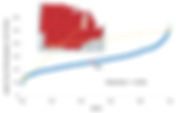
The workforce potential is a data-based estimate of a reasonable increase in labor force participation rate by specific types of individuals. SM Workforce Potential SM Workforce Potential Prioritize Your 40 Talent Pools Based on Local Availability Workforce Potential SM The Workforce Potential is the number of additional individuals your community might be able to pull into the local labor force. The workforce potential has 40 different components, specifically, the number of new employees in each of the nearly 40 different types of individuals (Workforce Elements ). For example, the workforce potential for your county will estimate how many more veterans you might be able to pull into the local workforce, how many individuals with a disability you might be able to hire, the number of males 25-54 years old, etc. To create the Workforce Potential , we compare your county with the 3,143 U.S. counties and the District of Columbia. Below is one of 40 workforce potential graphs, each representing a different subset of the labor force. The 3,000+ counties are ranked from the worst (rank = 0) to the best (rank = 1) in terms of the fraction of individuals either working or not working. In this example, the fraction of Individuals with a Disability who are not in the labor force varies from about 90% for the lowest-performing counties to about 10% for the best counties . This data can be used to compare your county with your aspirational peers - the counties that look like yours regarding the fraction of individuals working but that have a slightly higher labor force participation rate. For the case of Individuals with a Disability, we can use the estimate of an improved participation rate for this subset of individuals, together with the number of individuals with a disability in your county, to calculate a reasonable number of additional individuals with a disability you might be able to pull into the local workforce. This process is repeated for the 39 other workforce elements. A 10% improvement in rank (from the median value) is used for all 40 elements to allow better comparisons between workforce elements. This information can then be used with other local information to decide which labor pools are likely the largest and which pools you may be best equipped to attract to your organization. Since all potentials are relative, they can be scaled up or down. If your organization employs 1% of all individuals in the county, multiplying the values by 1% will give a better estimate of possibilities. Of course, your efforts versus your competitions' efforts also affect the outcomes you achieve. Keep in mind that there are variations in the potential between categories. Some are annualized numbers, while others are totals. Also, the time to make changes can vary from months to years. It is best to begin by comparing potentials within each category. The next step in the process is to understand and address the various cons traints preventing the different types of individuals from working for you. T he Workforce Root Cause Matrix links the 40 Workforce Elements to the 25 root causes that can limit hiring success and retention. Back to the Workforce Vector
- Let's Talk Strategy | Midwest Workforce
Let's talk if you need an engaging keynote and breakout sessions or a workforce strategic planning session for your Leadership Team. Contact Us: Let's Talk Strategy Move from Reactive Hiring to a Permanent Solution "Workforce stability isn't found in the latest hiring trend or a temporary patch. If you are ready to move past reactionary hiring and invest in a data-driven, long-term roadmap, let’s talk. This call is for leaders committed to building a permanent solution for their labor needs." Booking options Keynotes & Workshops Conferences and Associations In-person or virtual delivery, customized to your event scale. Every keynote integrates current, region-specific labor data. Workshop participants leave with a draft of their Workforce Strategic Roadmap. Book a Keynote Executive Strategy Leadership Teams Align leadership on current and future workforce issues with a vision-setting keynote. Develop strategies using the Balanced Scorecard framework. Shift from reactive hiring to a sustainable, long-term workforce roadmap. Book a Planning Session Community Planning Economic Developers Facilitate unified planning for city managers and business leaders. Leverage county-specific data to guide policy and strategy. Identify and engage the hidden workforce to increase labor participation rates. Book a Community Session Discovery Call Custom Needs Pinpoint your primary workforce bottlenecks in a 15-minute diagnostic. Receive immediate, actionable next steps to resolve critical gaps. Determine the right engagement model for your timeline and budget. Schedule a Discovery Call Form Top Service Category Which service are you interested in?* Required Fields First name* Last name* Email* Company or Organization name* Location & Date (If Known) Date Month Day Year Discovery Call or Zoom/MS Teams Meeting Information Phone First Choice for Call/Meeting Second Choice for Call/Meeting Submit
- Workforce Elements | Midwest Workforce Strategies
Workforce Elements are the 40 different types of individuals you could target to grow your organization. The 40 Workforce Elements Identifying the Untapped Talent Pools Your Competitors Miss The components of the Workforce Vector are termed the Workforce Elements . The 40 elements fall into five business and Human Resource categories: Increasing the output of your current employees; Retaining your current employees; Hiring individuals who are not employed, under-employed, or unemployed; Attracting individuals employed by others; and Building your future workforce. Broad descriptions of the five categories are described below. D etailed definitions of the 40 workforce elements can be found here . 1. Employee Output: The first workforce category involves increasing the productivity of your current employees so you can reduce the number of new employees you need to hire. These productivity enhancements are split into three elements. a) Capital Investments – Increasing the output of your employees by investing in intellectual property and equipment. b) Labor Composition – Increasing the output of your employees by improving their level and mix of education, skills, and experience. c) Process Improvements - Improving processes using tools like Lean to increase employee output. 2. Retention: The second category covers the retention of current employees, which reduces the need to hire new employees. There are three elements in the retention category. a) Employee Retention - Reducing the number of team members that are quitting and those being discharged (fired). b) Layoffs - Individuals being laid off because of non-steady demand for products or services, but may need to be replaced at some point in the future. c) Out-migration - Individuals quitting and then moving out of the county. These individuals are included in the workers who have left an organization but are examined separately because special strategies may need to be implemented to successfully retain these individuals in the community. 3. Not in the Labor Force: The third category includes individuals who are not working. They are broken into two broad groups. a) Individuals categorized by age. A few age brackets are further split based on gender and status as a student. b) Individuals categorized in some way that typically crosses age brackets. Examples include individuals with a disability, individuals recently incarcerated, individuals with income below the poverty level, individuals without a college degree, Latinos, veterans, and volunteers. These are studied separately because: i) they may need to have subset-specific accommodations addressed before finding suitable employment; or ii) special strategies may need to be developed to succeed at recruiting this sub-group of individuals. 4. Employed Elsewhere: The fourth category includes individuals employed elsewhere, often outside the county. They are broken into three broad groups. a) Individuals typically employed outside the county. This includes individuals who could in-commute to a job in your county and those who may be persuaded to stop out-commuting to a job in a nearby county. It also includes remote workers - individuals at a primary work location different from the normal place of business in the county. b) Migrators - Individuals who are migrating to your county for employment from another county in your state (in-state migration), another state (out-of-state migration), and another country (international migration and refugees). c) Individuals employed in the county. This includes contract employees (Gig workers, Temp workers, ...), converting part-time employees to full-time status, poaching employees from competitors, hiring individuals who want a second job, and enticing local small business owners to transition away from self-employment. 5. Future Employees: The fifth category involves developing your future workforce pipeline. This could involve a variety of strategies like school partnerships, tours of businesses, and participation in youth development activities. We include three elements in this K-22 category: a) Apprenticeship programs; b) Internships; and c) Youth programs that include skills development on topics like leadership, public speaking, and problem-solving. This work focuses on Boy Scouts, Girl Scouts, 4-H, and First Lego League. After individuals are split into these 40 different elements, we proceed to quantify the potential to increase the labor pool of each. This is termed the W orkforce Potential . Back to the Workforce Vector