Search Results
38 results found with an empty search
- Midwest Workforce Index | Midwest Workforce Strategies
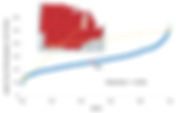
The Midwest Workforce Index (MWI) is a composite index that aggregates several employment-related economic indicators. Midwest Workforce Index Is it getting easier or more difficult to find new employees? SM Release Date: May 19, 2026 March 2026 MWI at 48.8 The preliminary March 2026 Midwest Workforce Index (MWI) stands at 48.8. The MWI creates a succinct monthly measure of changing hiring conditions in the Midwest, where values above 50 indicate that hiring was easier than in the previous month. The Index has remained within about two points of 50 for 19 consecutive months, resulting in a 19-month average of 50.0. This indicates that employment availability has remained virtually unchanged since mid-2024. Current hiring conditions now mirror conditions experienced in the two-year period preceding the 2020 recession. Countervailing Economic Forces: The stagnation in hiring conditions results from opposing economic metrics. Reduced demand for employees (evidenced by lower demand for employees in the services sector and an increase in layoffs and discharges) makes it easier to find employees. However, these gains in hiring ease are counteracted by a reduction in available labor. This tightening is observed in lower Labor Force Participation Rates (LFPR) and a reduction in the size of the civilian labor force. It is not getting more difficult to hire new employees, but it is not getting easier either. Looking ahead, continuing economic uncertainties may increase labor availability for some sectors, but this will likely be offset by structural reductions in the labor pool, specifically dramatic declines in immigration and continued Baby Boomer retirements. Note on Methodology: The index data is not displayed for the period immediately following the 2020 recession due to the extreme volatility of the underlying indicators during that time. Research is ongoing to better represent this period. Regional Variance: The MWI represents the entire Midwest region. Local migration patterns, industry mix, and other demographic variations will affect specific markets; therefore, the MWI may not perfectly reflect local experiences. MWI Time Series (2019-2026) Note: This is preliminary work. Past values will change as the research continues. The Basics The Midwest Workforce Index is a research effort by Midwest Workforce Strategies. Past values of the index will change over time as the research continues and for additional reasons highlighted below. The MWI is a composite index calculated by aggregating many workforce-related economic indicators into a single dimensionless number. The design intent is to create a succinct, reasonable, and easily comprehensible measure of the change in effort required to hire new employees in the Midwest. The index design aims to show how hiring conditions may have changed in the Midwest from the previous month. It appears similar to other indicators like the Institute for Supply Management's PMI in that the range varies from 0 to 100, with a value of 50 indicating no change from the previous month. It differs in two primary ways - it is not a diffusion index, and a value above or below 50 indicates economic conditions opposite to what is suggested by the PMI. When the MWI has a value over 50, the aggregated indicators are trending in a way that suggests a possible improvement in the availability of workforce over the previous month. This would typically occur in a contracting economy. Attracting employees may be more difficult than in the prior month when MWI values fall below 50, typically occurring in an expanding economy. The Implications Since the index is based on various publicly released indicators, the MWI is published after the date the last aggregated indicator is released. As such, and because several indicators in the MWI are lagging indicators, the MWI should be considered a lagging indicator - the state of the workforce situation in the past. It is meant to serve as a broader confirmation of what you may have been experiencing and not as a gauge of current or future workforce conditions. More to the point, the index is meant to be used as a discussion piece as you try to understand what you see in local hiring conditions. For instance, do you work in a community that is naturally attracting or losing people? Is your industry rapidly growing or fairly level? Has your organization struggled with attracting and retaining individuals more than other organizations in your area? Disclaimer and Terms of Use The information provided here is part of an ongoing research project. Data is provided “as is” - solely to create a dialog about Midwest workforce shortages. The information should not be used to make business decisions. Midwest Workforce Strategies, LLC will not be liable for any damages related to your use of the data. Past MWI values will change over time as the research continues, government indicators are revised, and more recent values of the aggregated economic indicators are released. Seasonal variations in workforce conditions will likely be missed since most component indicators in the MWI are seasonally adjusted. Local conditions can vary significantly from Midwest averages, so the behavior of the MWI may not align with your regional observations. Some MWI component indicators are naturally ‘noisy’ and may generate unrealistic month-to-month variations in the MWI. Long-term MWI levels and trends are likely a better barometer of Midwest workforce conditions. Please get in touch with me if you would like to discuss workforce implications in your community. Let's talk.
- Workforce FAQs | Midwest Workforce Strategies
Frequently Asked Questions resulting from over 100 workforce presentatons given across the country. Topics include population, employees, labor force participation, employee types, and more. Frequently Asked Questions Workforce and Hiring Strategy Q: Why should I worry about hiring employees when the job market is down? [New May 2026.] A: Economies can grow fast, slow (like now), or shrink in a recession. Hiring in the Northeast and Midwest U.S., in rural areas, and for in-demand roles makes recruiting difficult regardless of broader economic trends. Baby Boomers are continuing to retire, birth rates continue to decline, and immigration has dramatically decreased. Anything you are experiencing today will change in the near future. Organizations that plan ahead will outperform those that don’t. When the economy becomes robust again, do you want to attract employees away from your competition, or lose your workforce to companies that planned ahead? Strategic workforce planning is a key initiative within successful organizations. You can learn more about the steps in workforce planning here: https://www.midwestworkforce.com/services/leadership-team-planning Q: What types of employees should I target when the economy picks back up? [New May 2026.] A: There are 40 different groups of individuals you could target. They fall into five broad categories: improving the efficiency of your current employees, retaining existing staff, hiring individuals who are not in the labor force, targeting individuals employed elsewhere, and developing the future workforce. The number of individuals in each of the 40 groups and the likelihood of hiring from each group varies by location. You must understand your local opportunities to effectively target your limited resources. The 40 groups are described here: https://www.midwestworkforce.com/wv/workforce-element-definitions County data is located here: https://www.midwestworkforce.com/resources/county-data Q: How can I be more effective at recruiting and retaining employees? [New May 2026.] A: Attracting employees depends heavily on the vibrancy of the economy. As the labor market becomes tighter, you will need to address the root causes that keep individuals from working for you. Unfortunately, there is no one-size-fits-all solution. There are 25 root causes that can prevent the hiring and retention of employees. To successfully hire from different groups, you must address the specific barriers affecting each one. Fortunately, companies are often already addressing some of these factors. To improve your hiring success, you may only need to resolve a couple of additional root causes. These are described in detail here: https://www.midwestworkforce.com/wv/root-cause-definitions Q: How does childcare affect the hiring of employees? Childcare (or family care, which includes senior care) is one of 25 root causes affecting hiring. See: https://www.midwestworkforce.com/wv/root-cause-definitions. It impacts 10 of the 40 different workforce elements. See: https://www.midwestworkforce.com/wv/workforce-elements. Here are a few things to consider. 1) Childcare can be solved externally, as a community effort, or internally, as a company-managed/supported benefit to employees. 2) These are the states with the highest share of females with children less than six years old in the labor force. The top 28 states are displayed, together with Utah, the 50th state. The 12 Midwest states are all among the top 27 states in the country in terms of labor force participation rate, with Minnesota at #1. 3) If the labor force participation rate of women with children is so high in many states, why is childcare still an issue? Quality and cost are often cited as problems. People are finding childcare, but it often erases a significant portion of the revenue they are adding to the total family income by working. 4) Keep in mind that there are childcare deserts as well as communities with a lot of capacity. You can find childcare data on the Resources page, located in the Root Causes section: https://www.midwestworkforce.com/resources/workforce-websites. 5) Be careful when reading the childcare literature if you suspect hype about a decline in the number of childcare businesses. The issue that needs to be tracked is the number of childcare spots, by location, and not the number of companies. 6) This issue disproportionately affects low-income families. If the cost of childcare offsets too much of an individual's new income or if the new income pushes the family income over a threshold (or benefit cliff) and they lose other income (e.g., SNAP benefits), then there may be no financial incentive for an individual to be employed and place their child in a childcare facility. Q: Why did workforce shortages happen so suddenly? A: Some are pointing to COVID stimulus checks, excessive unemployment benefits, and more as to the cause of labor shortages. While these short-term factors likely played some role in the rapid reduction of labor availability, other causes have been building for years. Recently, four labor-related trends, all negative, started to align. - The individuals at the peak of the post-World War II baby boom turned 65 in 2022. That means for the past decade and the decade to come, a large group of individuals is at retirement age, and fewer potential workers in the Gen Xers that follow. COVID accelerated the rate of retirement of the ‘Boomers.' This labor reduction trend will continue unless a significant number of Baby Boomers delay retirement or retirees re-enter the workforce. - Net international migration to the U.S. peaked in 2016 and has sharply declined since. [1] - After over five decades of growth, the female labor force participation rate leveled off and started to decline in 2000. This added to the seven-decade, slow decline in the labor force participation rate of men. [2] - In 2007, fertility rates hit a local peak and have been declining steadily since. [3] This means the number of native-born 14-year-old individuals available to work hit a peak in 2021 and will be declining going forward. Though not a large factor today, it will adversely affect the supply of new people entering the workforce for the next decade. In the short term, the only way to rapidly change this trajectory is for migration patterns to rapidly change, either domestically or internationally. [1] https://www.census.gov/library/stories/2021/12/net-international-migration-at-lowest-levels-in-decades.html [2] https://fred.stlouisfed.org [3] https://www.cato.org/blog/some-historical-context-fertility-decline Q: What is causing the slow population growth in the Midwest? A: One of the biggest drivers of the number of people in the local labor force is the local population. [1] Unfortunately, population growth in the Midwest is not keeping up with the rest of the country. The two drivers of population change are natural change and net migration. Natural change is live births minus deaths. Fertility rates in the U.S. have been declining for over a decade, which has had a negative impact on the rate of natural change. Even if fertility rates jumped tomorrow, it would be decades before there would be a substantial impact on labor availability. Mortality rates have also increased due to the aging population and, more recently, COVID-related deaths. From July 1, 2020, to June 30, 2021, 73% of U.S. counties saw a natural decrease in the population. [2] Net migration is the number of individuals moving into a region (county, state, or country) minus the number leaving the region. Suppose we choose a state as the region. In that case, individuals moving into the state from other U.S. states (out-of-state migration) and other countries (international migration) are key drivers of population growth. Individuals moving out of the state to another state or country (out-migration) is a driver of population decline. Net domestic migration is out-of-state migration minus out-migration to other U.S. states. The rate of people moving from one state to another has been trending down for decades [3], but differences vary across regions. Over the past two decades, for every two individuals that the Midwest has lost due to net domestic migration, the Northeast has lost five people, the West has gained one, and the South has gained six. From 2000-2019, Illinois lost 12.1% of its population due to a negative net domestic migration. Michigan was next, losing 8.1%. [4] The lone remaining population control is international migration. Unfortunately, the Midwest does not rank high in this measure of population change. The 12 Midwest states collectively have an average rank of #33 in the fraction of the population that is foreign-born. [5] Illinois tops the Midwest at 14.2% foreign-born, slightly below the U.S. average of 14.6%. Minnesota is next highest at 8.5%. South Dakota ranks last in the Midwest at 3.5%. Low immigration rates impact the population in one other way. The fertility rate of foreign-born women is higher than native-born women, though this has been dropping over the past decade. [6] [1] Discounting remote workers. [2] https://www.census.gov/newsroom/press-releases/2022/population-estimates-counties-decrease.html#:~:text=Natural%20decrease%20occurs%20when%20there,a%20rise%20in%20natural%20decrease [3] https://www.census.gov/content/dam/Census/library/visualizations/time-series/demo/geographic-mobility/figure-a-1.2.png [4] https://www.newgeography.com/content/006773-two-decades-interstate-migration [5] https://worldpopulationreview.com/state-rankings/states-with-the-most-immigrants [6] https://cis.org/Report/Immigrant-and-NativeBorn-Fertility-2008-2018 Q: What are the best workforce elements to focus on in rural areas? A: Many rural areas in the U.S. are suffering from severe workforce shortage issues due to flat or declining populations. The exceptions often include communities within driving distance of a metropolitan area, areas with natural or other in-demand amenities, and college towns or towns with excellent medical facilities. For rural communities that don't have these, I have found that the following workforce elements are often targeted: Employee output: 1.1, 1.2, 1.3 Retention: 2.1, 2.2, 2.3 Not in the labor force: 3.3, 3.4, 3.6, 3.7, 3.12, 3.13, 3.15, 3.16, 3.19 Employed elsewhere: 4.2, 4.3, 4.4, 4.10 Future employees: 5.2, 5.3 The workforce elements tied to these element numbers can be viewed here: https://www.midwestworkforce.com/wv/workforce-elements Q: Will the Labor Force Participation Rate return to pre-COVID levels? A: Labor Force Participation Rate (LFPR) is the fraction of individuals available to work that are in the labor force (employed and unemployed). [1] It is one of the most important workforce metrics for the Midwest after population growth since it also tells us the fraction of the population that could enter the workforce. To understand where we might be headed, we'll look at LFPR in a couple of different ways. The good news is that the Midwest has a very high LFPR. The bad news is that the Midwest has a very high LFPR. First, the bad news. Since the LFPR is so high in the Midwest, it means there are fewer people not working that might be pulled into the labor force. With our slow increase in population, it is even more essential to understand the potential to pull these non-working individuals into the workforce. (See the Not-employed Workforce Elements.) The good news is that Midwesterners want to work. The chart below shows the LFPR range, from worst to best, for Midwest states in each of two groups. [2] The states in the 'Northwest' Midwest have some of the highest levels of LFPR in the nation. This group includes Kansas, Iowa, Minnesota, Nebraska, North Dakota, South Dakota, and Wisconsin. States in the 'Southeast' Midwest have slightly lower LFPRs, roughly at the U.S. average. These states include Illinois, Indiana, Michigan, Missouri, and Ohio. Overall, the Midwest LFPR has been trending down for two decades, similar to U.S. trends. The U.S. LFPR for ages 16+ varies slightly by gender. The 2022 average LFPR for males is 1.2% below the 2019 average. The female LFPR is down 0.6% in the same period. The prime-age LFPR (25-54) for males has decreased by 0.6% in this timeframe, while the female prime-age LFPR has increased by 0.4%. The U.S. LFPR varies by age group. In 2022, 37% of those 16-19 years old were in the labor force, 71% of those 20-24, 82% of those 25-54, and 39% of those 55 and older. The chart below shows how the U.S. LFPR changed for these age groups from before the 2020 recession until now. [2] Specifically, the change from the 2019 average to the 2022 average. The good news is that the prime-age LFPR is back to pre-recession levels. The greatest drop is in the 55 and older age group. Though the increase in the 16-19 LFPR is encouraging, it is important to point out that the LFPR for this age group is near the lowest level it has been at since 1950. Also, the number of individuals in this four-year window is very small compared to the number of individuals 20 and older. As such, the overall impact of the 16-19 LFPR on the total LFPR is small. The 20-24 LFPR has been slowly declining since the mid-1980s. However, before the pandemic the 20-24 LFPR was increasing. This recent decline is not unexpected due to delays in schooling caused by the pandemic. An increase in LFPR may be possible after the effects of the pandemic subside. Given the number of individuals in this age window, the overall impact on the total LFPR would be small. The prime-age LFPR has been declining since about 2000 until it started to increase around 2015. Could it now continue to increase? Possibly, but there are many reasons this has been on a slow decline. Reasons cited in the media and the literature include an increase in the number of individuals with a criminal record, an increase in individuals with a disability, increased drug addiction, individuals delaying marriage, lack of affordable child care, the decreasing fertility rate, individuals delaying when they have children, individuals assisting with elder care, Baby Boomer wealth transfer, increases in time-to-degree, low wages, early retirement, individuals seeking a work-life balance, more individuals seeking part-time work, and more. Since so many factors drive the slow decline in LFPR, it seems unlikely that a substantial increase in prime-age LFPR will occur soon. The 55+ LFPR decline has been cited by many, especially recently with LFPR declines related to the pandemic. The chart below shows the LFPR for this age group since 2000. [2] A clear break in the LFPR occurred in 2009, likely related to the start of the Great Recession. The continued flat lining of the 55+ LFPR has been associated with the slow recovery from the recession and the early Baby Boomers (born in 1946) turning 65 in 2011. Given that the last Baby Boomers turn 65 in 2029, it's hard to imagine the 55+ LFPR will change significantly unless worsening economic conditions pull many retirees back into the labor force. The Bureau of Labor Statistics makes 10-year projections on various labor-related items. Reference 3 highlights recent LFPR projections for 2031. For every age group discussed above, the 2031 projections are lower than the 2021 LFPR levels. These projections are based on long-term trends and do not try to account for short-term fluctuations that could occur, like a recession. When looking at the LFPR changes of the different age groups of individuals, it is hard to believe that any sizeable change in the labor force participation rate will occur over the next five years without some significant economic event like a recession, continued high inflation, or the like. Given population growth concerns in the Midwest, organizations will likely need to target recruitment to specific subgroups of individuals within and not in the labor force to find sufficient talent. [1] The civilian noninstitutional population excludes active-duty members of the military, those confined to correctional institutions, and those in residential care facilities. [2] Data from www.bls.gov. [3] See https://www.bls.gov/emp/tables/civilian-labor-force-participation-rate.htm. Q: What are the best workforce root causes to focus on in rural areas? A: Many rural areas in the U.S. are suffering from workforce shortages due to declining populations. However, communities within driving distance of a metropolitan area or with in-demand amenities can buck this trend. For rural communities that don't have these opportunities, I have found that rural communities can address the following workforce root causes, which impact many of the workforce elements: - Expertise/learning/training, - Targeted marketing/engagement, - Culture, - Work schedule/location, - Wages & Benefits, - Management, - Transportation, - Policy restrictions - Internal, - Child care, - Housing, - Job security, and - Amenities. The full list of 25 root causes can be found here: https://www.midwestworkforce.com/wv/root-cause-definitions Q: Why is it so difficult to find high-school students to fill part-time jobs? A: I asked ChatGPT this question, and the AI answer is shown below in [brackets], together with my comments and data following. [Finding teenagers to fill part-time jobs has become increasingly challenging due to several factors. One significant reason is the heightened academic pressures and extracurricular commitments that demand more of their time and energy, leaving less availability for work. Additionally, the competitive landscape for college admissions encourages teenagers to focus on unpaid internships, volunteer work, and other resume-building activities rather than traditional part-time jobs. The rise of the gig economy and online opportunities also provides alternative ways for teenagers to earn money, such as freelance work, content creation, or tutoring, which often offer more flexible schedules. Furthermore, parental concerns about safety and the overall work environment contribute to a decline in teenagers seeking part-time employment. Together, these factors create a complex environment that makes it difficult to attract and retain teenage workers in traditional part-time roles.] I find it hard to believe that many companies hire teenagers for ‘freelance work’ or ‘content creation.’ The following are the reasons I have seen in the literature for the long-term decline in the teenage labor force participation rate. Students volunteer more. More females participate in sports. Higher rates of high school graduation. Competition from a rising immigrant population. More students are focusing on college preparation. The younger the age, the more transportation becomes a constraint. Why work for minimum wage? I can take out loans and pay them back after college. Manufacturing declines have pushed adults into the service sector, competing with youth. Parents are providing more funding to their children, so there is less need for them to work. In the past, there was often one parent employed and the other able to help with the teen's job issues. Today, there is a higher probability of a single parent or both parents being employed, which limits the time to assist teenagers with job-related needs. What does the data say? The youth labor force participation rate (LFPR) has been declining since the 1970s. It has tended to remain level between recessions but then drops rapidly in recessions. Note that this data is for formal jobs and does not include informal jobs like babysitting, grass cutting, snow shoveling, etc. Even when there is a sufficient supply of teenagers in a community, and employers are willing to hire them, the results are often not what is hoped for. The LFPR of teenagers is lower than for the rest of the population, and it decreases as age decreases. Teenagers often work part-time, part-year, or part-time for part of the year. The unemployment level of teenagers is higher than for the rest of the population. I estimate that for an organization with 300 Full Time Equivalent (FTE) employees, at most, one FTE is 14–15 years old. If you look at the number of specific individuals (versus FTEs), you are a company with 1,000 employees, and you look like the U.S. average: 9 employees would be 14-15 years old, 13 employees would be 16-17 years old, 21 employees would be 18-19 years old, and 957 employees would be 20 or over. Essentially, only 4 of 100 employees would be a teenager. Q: Will the search for employees get easier as the Midwest economy slows down? A: Some, but keep in mind that several factors are at play. 1) The Midwest Workforce Index suggests that the month-to-month changes in many of the workforce indicators have subsided. Unfortunately, many indicators that make up the index are at two-decade lows. For example, this graph shows unemployment in the Midwest census region. [1] The June and July 2022 unemployment rate in the Midwest was the lowest it has been since 1976. 2) Industries such as retail, restaurants, travel, tourism, and a variety of manufacturing subsectors tend to be more negatively impacted by an economic slowdown than industries like food manufacturing, insurance, education, utilities, healthcare, and government. The industry mix in your community will affect the number of layoffs and the availability of labor. 3) Demographics is another factor (see the population pyramid FAQ). The Baby Boomers are retiring, fewer young adults are entering into the working-age population, and immigration has been declining. See the graph below for the entire U.S. [1] This plateauing in the number of working-age individuals should dampen the effect of a slowdown on layoffs. Your local conditions may be better or worse than conditions elsewhere in the Midwest based on your local demographics. 4) The skill sets of new individuals looking for a job may differ from your needs. This would reduce any potential gain in the available workforce. 5) A recent behavior I have observed in some companies is what is referred to as labor hoarding. [2] Holding on to employees even with a reduction in the need for labor, possibly out of fear of not finding employees once the softening of the economy ends. Some companies keep a larger than necessary workforce but limit the hours for some of the staff. Others assign employees tasks that were never fully taken care of when the economy was doing well. The business case must be made to take on these additional costs versus the accrued savings from completing the tasks, any reductions in layoff expenses, and reductions in new hiring once the slowdown ends. See the other FAQ on labor hoarding. The most important thing to remember is that when any slowdown ends, the Midwest will likely be back in the same situation we were in before. Any workforce planning you do today, even with a slowdown, will benefit you when the economy rebounds. [1] https://fred.stlouisfed.org [2] https://www.inc.com/steven-i-weiss/labor-hoarding.html Q: What are the elephants in the room that often surface in workforce workshops? A: One undercurrent that often surfaces is the perception that HR needs to market more. This often leads to brainstorming sessions on ideas for more marketing – more billboards, etc. Running neck and neck is resistance from an individual in a department with the most likelihood of more work. Resistance can come from the head of operations, the plant manager, or even from HR. Changing processes may lead to more work for their department, even though work may be reduced across the organization. A great example is moving from hiring only full-time employees to part-time staff. Hiring more part-time employees can increase work for HR staff and make scheduling more complex on the plant floor. However, it can also lead to a large increase in applicants. Q: Which workforce root causes affect the greatest number of workforce elements? A: For the research completed to date (22 of 40 workforce elements), Expertise/ Learning/ Training and Targeted Marketing are the root causes that influence the greatest number of workforce elements. [1] The bar chart shows the ranking of all 23 root causes. This chart only highlights the relative number of linkages between the different types of individuals (workforce elements) and what is constraining them from working or being retained (root causes). A given root cause impacts different workforce elements to different degrees. A few comments: - Targeted marketing is important because different types of people are best reached in different ways. However, despite its importance, marketing is the last step in the Workforce Vector process. If root causes are not addressed, marketing may be futile. Even if there is success in hiring, reduced retention may lead to added costs. - I've observed internal policy restrictions as a constraint in most of the companies I have worked with. Companies live with policies that were developed years earlier, and that may have become irrelevant ... but the old decisions live on. A perfect example is, "We only hire full-time staff.' Companies have policies like this because scheduling is easier, HR has fewer people to process, etc. Given that about 20% of all employees are part-time workers, policies like this limit the size of an organization's potential workforce pool. - Project Management and Project Selection/ Scope rank low because they predominantly affect 'virtual' people. By virtual people I mean getting more work accomplished with no more people through Automation and Continuous Improvement. Essentially, you are getting more work accomplished as if you had hired more individuals. [1] Root cause research is not yet complete. As the Root Cause Matrix is developed further, this result may change. Q: Why can’t I find people with the economy slowing down and fewer companies hiring? A: There are a lot of issues affecting labor availability, but one of the most significant drivers is the fraction of the population that works. This chart displays the prime-age (25-54 years old) Labor Force Participation Rate (LFPR) for males and females in the 50 states. The orange crosses show the average of the states in each region (*). What does this chart show? - About nine women are in the labor force for every ten men. - There are about two women who are not in the labor force for every one man. - The Midwest leads the country in the fraction of both sexes in the labor force. There just are not many people left to hire. - Combining both sexes, South Dakota, Iowa, and Minnesota have the most people in the labor force, at over 89%. - The states with the highest fraction of men in the labor force are North Dakota, Kansas, Utah, Iowa, and Minnesota. These are the state averages, which means in some counties in the U.S. there could be more than 95% of prime-age males working. - The states with the highest fraction of women in the labor force are South Dakota, Minnesota, Iowa, Nebraska, and North Dakota. - Vermont, South Dakota, Nebraska, Alaska, and Minnesota lead the way in gender work parity, with over 92% of women in the labor force compared to the men in the labor force. - The Midwest and the Northeast are above the national trend in the number of women in the labor force. The West and South fall below the trendline. - Comparing regional averages, the Male LFPR in the South is 5% less than the Midwest. The Female LFPR is 7% less. Essentially, there are few people left to hire in the Midwest and Northeast. More people are available in the West and South, but they are not in the labor force. The people who are not working are not working for a variety of reasons. Some of the issues are: - The jobs are not where the people live, given the need for reasonable commutes and affordable transportation. - Some individuals have disabilities that prevent them from working. - Some individuals have sufficient income from family members and savings that they do not need to work. - The cost to work (clothing, day care, transportation, government benefit cliffs) often is too large compared to the revenue from work, especially in low-wage states. - Women work at a much lower rate in some states, especially in the West and South. - In summary, companies and communities are not addressing the 25 root causes that keep people from working. See https://www.midwestworkforce.com/wv/root-cause-definitions. There are five broad talent categories to consider when trying to grow: 1) get more output from current employees, 2) retain current employees, 3) pull more people into the workforce, 4) attract people to your organization who are employed elsewhere, and 5) build the workforce of the future. A focus on strategy three might be best for many southern states, while strategies one, two, and/or four might lead to better results in the Midwest and Northeast. (*) These are the Midwest and West Census regions. Delaware, Maryland, and Virginia have been moved from the South Census region to the Northeast region since these states behave more like Northeast states in many of their labor demographics, and to get roughly one-fourth of the states placed in each of the four regions. The data is from 2023. Q: Why does the entire executive team need to be in attendance at workforce workshops? A: Organizations have a vision and strategies for their entire organization, but most do not have a workforce vision and workforce strategies designed for future workforce realities. This is not an HR problem. The entire company has to be on board with how the company needs to change to win the competition for talent. A great example of this is the company that asked their engineering team to learn more about the issues facing the U.S. and the opportunities to ‘Turn 90 degrees.’ Leadership wanted engineering to design future products requiring fewer people to build their product, fewer to install their product, and fewer to address warranty issues. Q: My county data seems different from what I expected. Could there be an error in your data? A: There is always a chance for errors, in general, but especially so in research studies. The Workforce Vector is a new way to look at workforce, and the research and data analysis are ongoing. Over one-half a million numbers are imported into the website database, and it takes many millions of additional numbers to make all the necessary calculations and estimations to get county-level estimates. If something looks wrong, there is a slight chance it is wrong. Please drop me a note, and I’ll investigate it and get back with you. COMING SOON: I WILL BE ADDING MORE Q&A. PLEASE CHECK BACK. A: Coming soon. Coming soon: Which root cause should I focus on that will impact the most workforce elements? A: COMING SOON. Coming Soon: Which one workforce element should I focus on to attract the most employees? A: Coming soon. Coming Soon: Why doesn't the Midwest's low cost of living attract more people to live here? A: Coming soon. Coming Soon: What can I do to get more people to migrate to my community? A: Coming soon. Coming Soon: Is Labor Hoarding making it more difficult to find employees? A: Coming soon. Coming soon: Why is it so difficult to find teenagers to fill part-time jobs? A: Coming soon. Coming soon: What is the role of taxes on attracting people to our state? A: Coming soon. Coming Soon: Why should I be looking at local population pyramids? A: Coming soon. Coming Soon: Where do you see remote work headed? A: Coming Soon. Coming Soon: Is unemployment the issue? A: Coming soon. Coming Soon: It's the Millennials, right? A: Coming soon. I will be posting more Q&A over the coming months. Please email me if you have a specific question you would like answered. Back to Resources
- Workforce Element Definitions | Midwest Workforce Strategies
Detailed definitions of the 40 different workforce elements, including individuals with disabilities, immigration, automation, and more. Workforce Element Definitions The Technical Specifications for Every Available Labor Source Employee Output Retention Not in the Labor Force Employed Elsewhere Future Employees Employee Output Retention Employee Output Labor Productivity is real (inflation-adjusted) Gross Domestic Product (GDP) per labor hour. GDP is the value of goods and services attributed to businesses because of their labor and capital investments and how they organize these resources. Labor productivity depends on capital intensity, labor composition, and Total Factor Productivity. Capital Investments – Increasing the output of employees in organizations in the county by investing in intellectual property and equipment. Software and research and development are the primary components of intellectual property. Equipment primarily comprises communication equipment and computers but also includes vehicles and other items. An increase in output is converted to an equivalent number of new employees. Labor Composition – Increasing the output of employees in the county by improving the mix of employees in organizations. Employees can increase output by having better knowledge, skills, education, and experience. Gender also affects output through occupational selections, discrimination, and in other ways. An increase in output is converted to an equivalent number of new employees. Process Improvements (Total Factor Productivity) - T otal Factor Productivity (TFP) is the productivity improvement that results from the combination of labor and capital. Specifically, how effective labor and capital are organized to generate output. Improvements in organizational structure, management systems, and work arrangements lead to increases in TFP. Economies of scale, the degree of alignment and coordination (internally and with suppliers), the degree of capital and labor utilization, the amount of technology adoption, and resource reallocation all affect TFP. Changes to how goods and services are created and delivered can improve TFP by enhancing product and service attributes and reducing non-value-adding activities (waste) within processes. An increase in output is converted to an equivalent number of new employees. Retention Employee retention: Employed individuals in a county that separate from their place of employment due to quitting (voluntary separation) and discharges with cause (involuntary separation). Annual estimate. Layoffs: Employees in a county who are involuntarily separated from their places of employment due to conditions outside the employees’ control. Annual estimate. Out-migration: Employed individuals who permanently move from a specific county to a different county in the state, another state, or another country. Annual estimate. Not in the Labor Force Students 14-15 years old: Individuals in this age group who live in the county, are enrolled in a regular school, and are not in the labor force. A regular school may advance a person toward a high school diploma or a college, university, or professional degree. Individuals enrolled in trade schools, on-the-job training, or correspondence study who are not granted credits toward promotion in a regular school are not included. Non-students 16-19 years old: Individuals in this age group who live in the county, are not enrolled in a regular school or credit-granting program, and are not in the labor force. Individuals enrolled in trade schools, on-the-job training, or correspondence study who are not granted credits toward promotion in a regular school are included. Students 16-19 years old: Individuals in this age group who live in the county, are enrolled in a regular school, and are not in the labor force. A regular school may advance a person toward a high school diploma or a college, university, or professional degree. Individuals enrolled in trade schools, on-the-job training, or correspondence study who are not granted credits toward promotion in a regular school are not included. Females 20-54 years old: Women in this age group living in the county and not in the labor force. Males 20-54 years old: Men in this age group living in the county and not in the labor force. Individuals 55-74 years old: Individuals in this age group living in the county and not in the labor force. Females with children less than six years old: Women living in the county, not in the labor force, and with children under the age of six. Children are sons, daughters, stepchildren, or adopted children living in the household. Foreign born – naturalized citizen: Individuals who are living in the county, not in the labor force, not a U.S. citizen at birth, and granted U.S. citizenship after meeting the requirements established by Congress in the Immigration and Nationality Act. Foreign born – not a U.S. citizen: Individuals who are living in the county, not in the labor force, not a U.S. citizen at birth, and either a lawful permanent resident (green card holder), a temporary resident (such as a student), a humanitarian migrant (such as a refugee), or an unauthorized migrant. Individuals with a disability: Individuals living in the county, not in the labor force, and with a physical or mental impairment that substantially limits one or more of their major life activities, have a record of such impairments, or are regarded as having such impairments. Individuals experiencing homelessness: Individuals living in the county, not in the labor force, and either a) lack a fixed, regular, and adequate nighttime residence, b) will imminently lose their primary nighttime residence, or c) are fleeing/attempting to flee domestic violence and have no other residence. Individuals with income below the poverty level: Individuals who spent at least 27 weeks in the labor force but whose income still fell below the official poverty level. The Census Bureau defines the poverty threshold based on income, family size, and more. Individuals without a College Degree: Individuals who are living in the county, are not in the labor force, and do not have an Associate, Bachelor, Master, or Doctoral degree. Individuals recently incarcerated: Individuals who are living in the county, are not in the labor force, were formerly confined in a jail or prison, and on parole. Annual estimate. [1] Latinos: Individuals who are living in the county, not in the labor force, and of Cuban, Mexican, Puerto Rican, South or Central American, or other Spanish culture or origin, regardless of race. Part-time employees: Individuals who are living in the county, are not in the labor force, and may accept part-time employment. Unemployed: Individuals who are living in the county, not employed, and looking for a job. More specifically, they are 1) not employed, 2) are available for work (except for temporary illness), and either 3a) they made at least one specific, active effort to find a job during the prior four-week period or 3b) they were temporarily laid off and are expecting to be recalled back to their job. Note - unemployed individuals are technically considered in the labor force since they are actively seeking employment. Veterans: Individuals who are living in the county, are not in the labor force, and served in the active military, naval, air, or space service, and were not dishonorably discharged. Volunteers: Individuals who are living in the county that might work for an organization without compensation beyond expenses. As such, they are not considered part of the labor force. [2] Em ployed Elsewhere In-commuters: Individuals living outside of the county but commuting into the county to work. Out-commuters: Individuals living in the county but commuting outside of the county to work. Remote workers: Individuals who perform their job duties at a primary work location that is different from their organization’s place of business, which is located in the county. [3] In-state migration: Individuals living and employed in a different county in the state and who moved into the county for employment. Annual estimate. Out-of-state migration: Individuals living and employed in a different state and who moved into the county for employment. Annual estimate. International migration: Individuals living and employed in a different country and who moved into the county for employment. Annual estimate. [4] Refugees: Individuals living and employed outside of the U.S., are of special humanitarian concern to the U.S., demonstrate they were persecuted or fear persecution, are admissible to the U.S., and moved into the county for employment. Annual estimate. Contract/ temp workers: Individuals who do work for hire for a specific project or a set timeframe. They may be referred to as gig workers or freelancers. Individuals may be self-employed or work for a temp agency. Part-time to full-time employees: Individuals living in the county, employed in part-time jobs, and who may be able to transition to full-time employment. Poaching: Typically, poaching refers to hiring a competitor's employees who have a unique skill needed by the poaching company. With increased labor shortages, the term is becoming synonymous with targeting lower-skilled employees. In this work we define poaching as the hiring of employed individuals who are not actively looking for a different job. Second-job Employees: Individuals with a full-time job who take on a second, part-time job. Also referred to as moonlighting. The second job could be for a different employer or in a personal business (self-employed). The job may be ongoing or for a short period of time. [5] Self-employed Individuals: Sole proprietors or independent contractors, either incorporated or unincorporated. This work examines the subset of self-employed individuals with no employees and who do not have a second job at another organization. [6] Future Employees Apprenticeships: Graduates from apprenticeship programs registered with the Department of Labor. An apprenticeship program is a formal relationship between a worker and sponsor that combines on-the-job training and occupation-specific technical instruction in which the worker learns the occupation's practical and theoretical aspects. Annual estimate. Internships: Individuals completing an internship or residency, a formal training period during which the individuals work under the supervision of experienced workers in a professional setting. Annual estimate. Youth Programs (enrolled in select programs): Individuals 5-18 years old living in the county enrolled in 4-H, Girl Scouts, Boy Scouts, or FIRST LEGO League. The majority are likely not employed. NOTE: Most of these definitions are edited versions of Bureau of Labor Statistics descriptions (https://www.bls.gov ). Some have been more narrowly defined by the types of individuals included in the Workforce Vector. For example, the number of individuals with a disability who are not in the labor force. Some definitions refer to the total population of a group of individuals, while others refer to the annual change in the population. Footnotes [1] Contracting with a state’s prison system for work performed by incarcerated individuals is not included. [2] This definition of volunteers does not include ‘invisible’ or ‘direct’ volunteers, which are those helping others but not through a volunteer organization. [3] Remote work differs from telecommuting in that it often is beyond a reasonable commute distance and typically has minimal requirements to be on-site. Hybrid work is not included in this definition of remote work. [4] Non-citizens in the country on work visas are not included. Undocumented individuals may not be captured in the data. [5] Individuals who hold two or more part-time jobs are not included. [6] Unincorporated self-employed companies make up about two-thirds of all self-employed companies. Over 85% of these have no employees. Slightly over half of incorporated self-employed companies have no employees. Not in the Labor Force Employed Elsewhere Future Employees Back to the Workforce Vector
- Midwest Workforce Strategies | Leadership Team Planning
Workforce strategy workshops are a great way to develop individualized and actionable workforce plans. Leadership Teams and Boards of Directors step through the key elements of strategy planning and leave with a first draft of a plan. What is your workforce vision? Are your strategies different than your competitors? Do you have the systems in place to win the competition for workforce? Do you know where your future employees are and why they aren't working for you? What is your workforce vision? Are your strategies different than your competitors? Do you have the systems in place to win the competition for workforce? Do you know where your future employees are and why they aren't working for you? Leadership Team Planning Turn Executive Vision into a Hiring Roadmap Do your workforce strategies differ from your competition and are they delivering the desired results? If the answer is no, then a workforce strategic planning session will help you align your executive team and provide a roadmap for you to reach your workforce vision. Successful workforce plans require three primary components: a clear Vision, strategies built on the Workforce Vector framework, and Operational Excellence. The Workforce Vector system shows you how to develop a data-driven roadmap to take you from your current state to your workforce vision. Details Time: 2.5 - 4 hours. Who: Your Executive Team or Board of Directors. Handouts for Attendees: Workforce Elements , Workforce Root Causes , the Workforce Root Cause Matrix , and a Workforce Strategy Map template. Attendees can download additional copies of the handouts after the event from this page of the password-protected site. Data Access: Attendees are provided access to the Workforce Vector data on a password-protected site for three months following the event. Deliverable: A draft workforce strategic plan based on the Workforce Vector, written in a balanced scorecard framework. Cost: A video conference typically costs $2,000; in-person meetings cost more due to travel. Costs vary based on company-specific requests. Organizations receive a money-back guarantee. The fee is reduced for select not-for-profit organizations. Agenda 0: Setting the Stage 1: Create a workforce vision - The current state - The future state 2: Workforce Customer Strategy - Workforce Vector data - Competitor analysis - Workforce values - Workforce Element decisions 3: Workforce Strategy Value Proposition - Workforce Root Cause decisions - Workforce image and reputation 4: Operational Excellence - Recruiting processes - Retention processes - Workforce innovation - Risk management 5: Investment Tactics and Strategies "This is revolutionary." - Community College Board Member Build Your Strategic Roadmap Workshop Materials Back to Services
- William Pikturna | Midwest Workforce Strategies
William Pikturna provides web design support for Midwest Workforce Strategies. William Pikturna Web Development Associate William Pikturna supports the technical side of Midwest Workforce Strategies, focusing on custom website development. He writes the specific code needed for site features that go beyond standard design tools, ensuring the digital presence matches the company’s requirements. A standout student with a strong aptitude for mathematics, William completed the standard high school math curriculum by his freshman year to advance to Calculus as a sophomore. He applies this same discipline to leadership, serving as co-team lead for his FIRST Robotics Competition team and competing on the school math team. William works with a variety of programming languages, including HTML, CSS, and JavaScript, as well as C, C++, and Java. He will continue his education next year, pursuing a degree in Electrical and Computer Engineering.
- Resources | Midwest Workforce Strategies
Resources to help you find employees includes workforce vector data for all U.S. counties and DC, frequently asked questions (FAQs), videos & commentary, and a workforce calculator. Workforce Data & Resources Tools to Build Your Roadmap vec·tor /ˈvek-tər/ noun 1. Mathematics. An item that has both direction and magnitude, especially as determining the position of one state relative to another. | The automobile's velocity vector was comprised of a speed of 60 mph and a direction of northeast. County Data How does your county rank in hiring across the 40 workforce types? Where is the greatest potential to find new employees? Data for all 3,144 U.S. counties is located here . Frequently Asked Questions Q: Why is it so difficult to find high-school students to fill part-time jobs? Answers to some of the questions received from attendees at 100+ presentations. Workforce Calculator Are you successfully hiring across all 40 employee types? Click on the header or image to see how you compare with U.S. averages. Workforce Websites Where can I find more information on a specific workforce element? Click on the header or image to see links to websites with more data. Videos & Commentary Now Playing: Workforce Strategies Click on the header or image to see additional videos.
- Team Members | Midwest Workforce Strategies
The Midwest Workforce Strategies team: Ron Cox, Deb Sellers, Alex Sanchez Rangel, William Pikturna Team Members Your Workforce Strategy Partners Ron Cox President Keynotes Strategy Workshops Data Analytics READ MY BIO Deb Sellers Vice President Generations Indiv. with Disabilities Business Operations READ MY BIO Alex Sanchez Rangel Global Immigration Specialist Immigration Law International Strategies Diverse Workforce William Pikturna Web Development Associate Website Testing Restricted Access Pages Youth Programs Support Midwest Workforce Strategies is built on a foundation of diverse expertise. Our team combines backgrounds in aerospace engineering, human resources, economic development, immigration, productivity improvement, STEM programs, strategic planning, operations, and data analytics to provide a comprehensive view of the labor market. We do not rely on standard recruiting tactics; we use mathematical modeling and operational rigor to help your organization out-maneuver the competition.
- Northeast Region Data | Midwest Workforce Strategies
Select a northeast region county and Workforce Vector data is displayed. States include Maine, New Hampshire, Vermont, Connecticut, Rhode Island, Massachusetts, New York, New Jersey, Delaware, Maryland, West Virginia, Virginia, Ohio, Pennsylvania, and the District of Columbia. Northeast Region Workforce Vector Data Type your county name in the dropdown menu and then select it from the list. Workforce Vector data for your county will be displayed in the tables. [See Note A below.] Workforce Vector FAQs, definitions, and notes are included beneath the Workforce Vector tables. These pages need to be viewed on a desktop computer. The mobile-friendly version is still in development. NOTE: This is PRELIMINARY data and is subject to change . [See Note B below.] Jump to the Midwest Region Jump to the South Region Jump to the West Region Workforce Element Definitions Workshop Materials Filter by County County: General Information 0.1 Population 0.2 Population 16+ 0.3 Civilian Labor Force 16+ County Total County: Employee Output/yr 1.1 Capital Investments 1.2 Labor Composition 1.3 Process Improvements % GDP/yr Rank ENE/yr Workforce Potential/yr County: Retention/yr % Emp./yr Rank Employed/yr Workforce Potential/yr 2.1 Quits and Discharges/year 2.2 Layoffs/year 2.3 Out-Migration Rate/year Population Population Population Population Population Population Population Population County: Not in Labor Force % Not in LF Rank # Not in LF Workforce Potential 3.1 Students 14-15 [ Warning! See notes.] 3.2 Non-Students 16-19 3.3 Students 16-19 3.4 Females 20-54 3.5 Males 20-54 3.6 Individuals 55-74 3.7 Females with Children < 6 3.8 Foreign Born - Naturalized Citizens 3.9 Foreign Born - Not a U.S. Citizen 3.10 Individuals with a Disability 3.11 Indiv. Experiencing Homelessness 3.12 Indiv. with Income < Poverty Level 3.14 Individuals Recently Incarcerated 3.15 Latinos 3.16 Part-time Employees 3.17 Unemployed [See notes.] 3.18 Veterans 3.19 Volunteers (FTE) 3.13 Indiv. without a College Degree Population Population Population Population County: Employed Elsewhere % Base Rank Employed Workforce Potential 4.1 In-commuters 4.2 Out-commuters [ Warning! See notes.] 4.3 Remote Workers 4.4 In-state Migration/year 4.5 Out-of-state Migration/year 4.6 International Migration/year 4.7 Refugees/year 4.8 Contract / Temp Workers 4.9 Part-time to Full-time Employees 4.10 Poaching/year 4.11 Second-job Employees 4.12 Self-employed Individuals Population Population Population Population Population Population Population Population Population Population Population Population Population Population Population Population County: Future Employees % Base Rank Total Workforce Potential 5.1 Apprenticeships/year 5.2 Internships 5.3 Youth Programs Population Population Population Population FAQs How can I learn more about what these numbers mean? There are a number of resources on the site to help explain the Workforce Vector and how it is used to help organizations grow their workforce. The 40 workforce elements (the rows in the tables above) are described here . The potential to increase employment of each type of individual is described here . Can we talk about how this can help me find employees? If you would like to have a brief conversation about how this data can be used to increase or retain your workforce, send me an email at ron.cox@midwestworkforce.com or contact me through my website contact form . How accurate are these numbers? CAUTION! The numbers provided here are approximations and should only be used to get a sense of local conditions and possibilities. The data should only be used to compare and contrast options and to guide the user as they explore more local and more timely information. The data is not exact for the following reasons. The Federal data are approximations based on surveys. All values have an error bound, meaning the result displayed is the best estimate but there is a chance the actual value is different, but within some error bound. For instance, a county estimate for a group size could be 120 with a margin of error of 75. The value 120 is the estimate of the group size (displayed in the table above) and the 75 is the margin of error. See www.bls.gov for more information on margins of error and confidence level. Error margins are not included in the table above. Note that the accuracy of the estimates tend to be better (lower margin of error as a percent of the estimate) for larger populations where the sampling size is larger. Estimates for low population counties tend to have much higher error ranges as a percent of the estimate. Five year averages are given for the majority of the values in the table. This is done to reduce the short-term fluctuations in the data and because data is not released annually for small counties because of the small sample size. Some data is not known at the county level, so statewide or national values for some variables are used in conjunction with local data (if available) to estimate local conditions. The errors in these estimates are greater when local conditions differ significantly from the state or national averages used in the calculations. Definitions (*): An asterisk indicates the workforce vector values shown (except for the potential) are an average of a portion of the counties in the state. This generally arises for small counties when Federal data is not available. See the FAQs (above) and the specific workforce element note (below). ENE: Equivalent New Employees per year. FTE: Full Time Equivalent. Labor Force: Individuals employed and unemployed. NA: Data not available. NILF: Not In the Labor Force % Not in the LF: The fraction of the civilian population 16+ that is not in the labor force. They are not employed nor are they unemployed. Population: Table entries marked as 'Population' are currently being created and will be updated over the next several months. RUCC: Rural-Urban Continuum Codes. Workforce Potential: The number of additional individuals that might be able to be pulled into a county's labor force if productivity, hiring, and retention rankings are improved by 10% from the median county values. Rank: The county place within all U.S. counties in terms of the percent employed. 1% = Top 1% (highest fraction employed or lowest fraction not in the LF); 100% = 99-100% (lowest fraction employed or highest fraction not in the LF). Workforce Element Notes Alphabetical general notes are listed first. These are followed by notes specific to each workforce element. Additional information will be added to the notes in the coming months. Notes will change over time as research continues. [A] The government combines some data areas so your ‘County’ name listed here may be slightly different. This applies to Alaska, Connecticut, and Virginia. Data for U.S. territories is not included in this work. [B] This work is on-going research and will change over time. All of the numbers presented here have errors of varying magnitudes. These errors occur because of the statistical modeling used by those creating the data, by changes in data over time, by the use of national or state-level data for county level information when data at the local level is not known, and by estimates made by the author when certain information is not known at the local level. See the FAQs above for more information. Some estimates of workforce element data are questionable and extreme caution should be used. Typically this occurs when there are very large variations in a quantity and the definition of the term and the actual data gathered by BLS or the Census Bureau differs. Additional errors can occur when local data is not available and state or national averages are used to arrive at an order of magnitude for a term. An example is Out-commuting. See 4.2 below. 0.1 Average of 2018-2022 county data. Population 0+ years old. 0.2 Average of 2018-2022 county data. Population 16+ years old. 0.3 Average of 2018-2022 county data. Civilian employed and unemployed 16+. 1.1 Annual data. Least-square linear fit to 2013-2022 state productivity data. State data is adjusted slightly to approximate county-level productivity changes. A limiter is applied to an annualized 2013-2023 GDP/hr county estimate to constrain the variation off of the state average. Annualized percent changes in county GDP/hr are split into capital, composition, and TFP components by assuming every county looks like the national average splits. The county estimate for capital may be higher or lower than the value shown because of the county mix of industry, labor, and other factors compared with the national and state averages of industry, labor, and other factors. The equivalent number of new employees is the percent GDP/hr change multiplied by the employment level (2018-2022 data). Base population = Employed 16+. 1.2 Annual data. Least-square linear fit to 2013-2022 state productivity data. State data is adjusted slightly to approximate county-level productivity changes. A limiter is applied to an annualized 2013-2023 GDP/hr county estimate to constrain the variation off of the state average. Annualized percent changes in county GDP/hr are split into capital, composition, and TFP components by assuming every county looks like the national average splits. The county estimate for capital may be higher or lower than the value shown because of the county mix of industry, labor, and other factors compared with the national and state averages of industry, labor, and other factors. The equivalent number of new employees is the percent GDP/hr change multiplied by the employment level (2018-2022 data). Base population = Employed 16+. 1.3 Annual data. Least-square linear fit to 2013-2022 state productivity data. State data is adjusted slightly to approximate county-level productivity changes. A limiter is applied to an annualized 2013-2023 GDP/hr county estimate to constrain the variation off of the state average. Annualized percent changes in county GDP/hr are split into capital, composition, and TFP components by assuming every county looks like the national average splits. The county estimate for capital may be higher or lower than the value shown because of the county mix of industry, labor, and other factors compared with the national and state averages of industry, labor, and other factors. The equivalent number of new employees is the percent GDP/hr change multiplied by the employment level (2018-2022 data). Base population = Employed 16+. 2.1 Annual data. On-going research. 2.2 Annual data. On-going research. 2.3 Annual data. Average of 2018-2022 county data. Fraction of the population 0+ that out-migrates each year. The number of out-migrators is adjusted lower by the identical amount in every county, by a national estimate, to approximate the number of employees that leave each county annually. This is on-going research and this number may be adjusted lower. Base population = population 0+. 3.1 The Students 14- to 15-years-old workforce element should be used with caution since there is very little research data available. The 14-15 population size is estimated from a 10-14 population value and a 15-17 value. The unemployment rate is assumed to be the same as the rate for the population 16-19, based on research prior to 2000. The employment participation rate is estimated to be a fraction of the 16-19 rate, based on research prior to 2000. There are many root causes associated with the 14-15 age group, which make it difficult for individuals to find employment. This group is much more likely than other groups to work part-time and part-year, which further limits the impact the group can have on the local labor force. Average of 2018-2022 county population data. Base population = Population 14-15 estimate. 3.2 Average of 2018-2022 county population data. Base population = Non-student population 16-19. 3.3 Average of 2018-2022 county population data. Base population = Student population 16-19. 3.4 Average of 2018-2022 county population data. Base population = Female population 20-54. 3.5 Average of 2018-2022 county population data. Base population = Male population 20-54. 3.6 Average of 2018-2022 county population data. Base population = Population 20-54. 3.7 Females 20-64 with children less than six years old. Average of 2018-2022 data. Base population = Civilian females 20-64. 3.8 Data is only available at the county level for large-population counties. This data, together with the state average, is used to compute an average value for the fraction of the foreign-born not in the labor force in the small-population counties. When error bounds lead to a large variation in the estimate for the small-county average, the NILF estimate is limited to 1.5 standard deviations (of all states) from the state average. An asterisk (*) is used to indicate when a small-county average is used. Small counties with industries that tend to hire more/fewer foreign-born individuals will likely have a greater/smaller value of those not in the labor force than indicated by the average. Average of 2018-2022 state and county population data. Base population = Foreign-born - naturalized citizen population 16+. 3.9 Data is only available at the county level for large-population counties. This data, together with the state average, is used to compute an average value for the fraction of the foreign-born not in the labor force in the small-population counties. When error bounds lead to a large variation in the estimate for the small-county average, the NILF estimate is limited to 1.5 standard deviations (of all states) from the state average. An asterisk (*) is used to indicate when a small-county average is used. Small counties with industries that tend to hire more/fewer foreign-born individuals will likely have a greater/smaller value of those not in the labor force than indicated by the average. Average of 2018-2022 state and county population data. Base population = Foreign-born - not a U.S. citizen population 16+. 3.10 Average of 2018-2022 county data. Base population = Individuals with a disability 18-64. 3.11 This data is for the sheltered homeless, which is about one-half of all individuals experiencing homelessness. Some of the sheltered homeless are in the labor force, so the number NILF is less than the total in shelters. There is no data at the state or county level on the fraction of the sheltered homeless that are not in the labor force. The value provided here is an estimate based on 1) state data (2018-2022) on the fraction of the state population in shelters, 2) national data on the fraction of the sheltered homeless 16+ years old (assumed to hold in all counties), 3) the national value for those in shelters who are not in the labor force (assumed to hold in all counties), and county data on the population 16+ (2018-2022). The workforce potential is computed using a different approach because of the lack of NILF data. The potential is the increase in labor available if homelessness decreases in comparison to peers. The potential value is low in part because some of those in shelters are already employed. Since the fraction of individuals experiencing homelessness tends to be higher in urban areas, urban data is likely under-estimated and rural data is likely over-estimated. Base population = population 16+. 3.12 Individuals with income less than the poverty level. Average of 2018-2022 data. Base population = Civilian labor force 16+. 3.13 Individuals without a college degree only includes those without a high school degree and those with a high school degree that did not complete any higher education courses. Individuals who completed some college-level courses but did not get a degree are not included. Average of 2018-2022 county data. Base population = Individuals 25-64 with high school as the highest degree. 3.14 On-going research. 3.15 Average of 2018-2022 county population data. Base population = Latino civilian population 16+. 3.16 Average of 2018-2022 county data. The 'Not in Labor Force' value is all individuals 16+ not in the labor force. It is assumed that individuals entering the labor force will distribute more favorably to part-time employment. Specifically, to the average of a) completely part-time and b) the county ratio of part-time to full-time employment. Base population = Population 16+. 3.17 Average of 2018-2022 county data. The unemployed are technically considered to be in the labor force. The other workforce elements in this category highlight those that are not in the labor force. That is, individuals who are neither employed nor unemployed. The county unemployment rate is shown in the '% Not in LF' column. Base population = Civilian population 16+. 3.18 Average of 2018-2022 county data. Base population = Veterans 18-64. 3.19 A verage of 2018-2022 county data on the population 16+. Volunteering rate is an average of 2017, 2019, and 2021 data. Volunteer data is only known at the state level so it is assumed that the county volunteer rate equals the state average. The non-volunteer rate is shown in the '% Not in LF' column. The '# Not in LF' and the Workforce Potential are converted to an equivalent, fully-employed person using the national average of the number of volunteer hours per volunteer. 4.1 On-going research. 4.2 The out-commuting workforce element is known to have large errors. Differences in remote work, hybrid work, and other work-location situations impact government survey results, so caution should be used when reviewing results. In addition, the ability to change commuting patterns can be difficult in certain situations. For instance, when a professional is commuting from a small county with poor job fit opportunities to a nearby metropolitan area. The ability to change this commuting behavior is less than what would be predicted by the perturbation methods used in this work to estimate potential changes. Average of 2018-2022 county population data. Base population = Employed 16+. 4.3 Average of 2018-2022 county data. Includes individuals who usually worked from home, so this includes some hybrid work. Remote work varies by industry, so variations in industry mix by county will affect the potential calculation. As such, the potential should be considered an upper estimate. Base population = Employed 16+. 4.4 Annual data. Average of 2018-2022 county data. The in-state migration rate is the number of individuals moving to the county per year from within the state, as a percent of the county population 1+. The in-state migration rate is a modified rate to adjust for states with (typically) one very large population county compared to the rest of the population in the state. The number of migrators is adjusted lower by an identical amount in every county, by a national estimate, to approximate the number of employees migrating. This is on-going research and this number may be adjusted lower. Base population = population 1+, adjusted for county population skew. 4.5 Annual data. Average of 2018-2022 county data. The in-migration rate is the number of individuals moving to the county from other states per year, as a percent of the county population 1+. The number of out-of-state migrators is adjusted lower by an identical amount in every county, by a national estimate , to approximate the number of employees migrating. This is on-going research and this number may be adjusted lower. Base population = population 1 +. 4.6 Annual data. Average of 2018-2022 county data. The immigration rate is the number of individuals moving to the county from other countries per year, as a percent of the county population 1+. The number of immigrates is adjusted lower by an identical amount in every county, by a national estimate , to approximate the number of employees migrating. This is on-going research and this number may be adjusted lower. Base population = population 1 +. 4.7 Annual data. Average of data from 2018-2022 for county population and from 2013-2023 for refugees/year. Assumes refugees are distributed proportional to the local population. When refugees arrive, they often are more concentrated in counties that have more Federal and local resources. See: https://www.acf.hhs.gov/orr/map/find-resources-and-contacts-your-state. Refugee estimates are likely over-estimated in counties with few resources and under-estimated in counties with more settlement resources. The number of refugees is adjusted lower by an identical (national) amount in each county to approximate the number of refugees that will be in the labor force. This is on-going research and this number may be adjusted lower. Base population = Population 0+. 4.8 On-going research. 4.9 Average of 2018-2022 county data. The potential is the conversion of current part-time employees to full-time employees, not new full-time employees from those not-employed. Base population = Full-time and Part-time/Part-year population 16+. 4.10 On-going research. 4.11 On-going research. 4.12 County estimates for the number of self-employed (SE) individuals with no employees are made by using 1) 2018-22 county data on the number of employed civilians 16+, 2) 2018-22 county data on the number of SE by incorporation status and gender, 3) 2015 national data on the fraction of the SE without employees by incorporation status, and 4) 2019 data on the fraction of the SE with no employees by gender. The potential value is likely an upper-estimate due to how industry mix affects the local self-employment rate. Whether a self-employed individual holds one or more jobs would also effect the potential, but this effect is unknown. Rural areas tend to have a higher fraction of individuals who are self-employed and the ability to pull them into employment may not be as high as in urban areas. Base population = civilian employed population 16+. 5.1 Annual data. Apprenticeships completed per year. On-going research. 5.2 Annual data. The number of internships completed each year. No state or county data is available for internships. The estimates provided here are based on the author's research on internships at one large Midwest university (2015-18 data). Internship locations were first correlated with county civilian labor force and RUCC data and then county estimates were made across the U.S.. A second estimate was made based on county-level data on the number of students enrolled in four-year colleges and graduate schools (2018-22) and various studies on the fraction of students who complete an internship. These values were then adjusted in some cases to address outliers (e.g. small population counties with universities). Both estimates were then scaled to match national estimates of the number of annual internships. These two different approaches were then averaged to get the results presented here. Base population = CLF 16+. 5.3 Youth programs include 4-H, Boy Scouts, Girl Scouts, and FIRST LEGO League participants. Values are the total number of individuals participating in a given year, which covers individuals in different years in school. Data on these programs is not available across the country, so estimates are made using Iowa data. The county participation estimate is based on the number of youth 5-17 in the county in 2018-2022 and the 2014-2018 Iowa participation rate data. The workforce potential assumes the standard deviation of the U.S. county participation rate is the same as the 2014-18 SD for Iowa. Base population = Population 5-17. Back to Resources
- Workforce Potential | Midwest Workforce Strategies
The workforce potential is a data-based estimate of a reasonable increase in labor force participation rate by specific types of individuals. SM Workforce Potential SM Workforce Potential Prioritize Your 40 Talent Pools Based on Local Availability Workforce Potential SM The Workforce Potential is the number of additional individuals your community might be able to pull into the local labor force. The workforce potential has 40 different components, specifically, the number of new employees in each of the nearly 40 different types of individuals (Workforce Elements ). For example, the workforce potential for your county will estimate how many more veterans you might be able to pull into the local workforce, how many individuals with a disability you might be able to hire, the number of males 25-54 years old, etc. To create the Workforce Potential , we compare your county with the 3,143 U.S. counties and the District of Columbia. Below is one of 40 workforce potential graphs, each representing a different subset of the labor force. The 3,000+ counties are ranked from the worst (rank = 0) to the best (rank = 1) in terms of the fraction of individuals either working or not working. In this example, the fraction of Individuals with a Disability who are not in the labor force varies from about 90% for the lowest-performing counties to about 10% for the best counties . This data can be used to compare your county with your aspirational peers - the counties that look like yours regarding the fraction of individuals working but that have a slightly higher labor force participation rate. For the case of Individuals with a Disability, we can use the estimate of an improved participation rate for this subset of individuals, together with the number of individuals with a disability in your county, to calculate a reasonable number of additional individuals with a disability you might be able to pull into the local workforce. This process is repeated for the 39 other workforce elements. A 10% improvement in rank (from the median value) is used for all 40 elements to allow better comparisons between workforce elements. This information can then be used with other local information to decide which labor pools are likely the largest and which pools you may be best equipped to attract to your organization. Since all potentials are relative, they can be scaled up or down. If your organization employs 1% of all individuals in the county, multiplying the values by 1% will give a better estimate of possibilities. Of course, your efforts versus your competitions' efforts also affect the outcomes you achieve. Keep in mind that there are variations in the potential between categories. Some are annualized numbers, while others are totals. Also, the time to make changes can vary from months to years. It is best to begin by comparing potentials within each category. The next step in the process is to understand and address the various cons traints preventing the different types of individuals from working for you. T he Workforce Root Cause Matrix links the 40 Workforce Elements to the 25 root causes that can limit hiring success and retention. Back to the Workforce Vector
- Let's Talk Strategy | Midwest Workforce
Let's talk if you need an engaging keynote and breakout sessions or a workforce strategic planning session for your Leadership Team. Contact Us: Let's Talk Strategy Move from Reactive Hiring to a Permanent Solution "Workforce stability isn't found in the latest hiring trend or a temporary patch. If you are ready to move past reactionary hiring and invest in a data-driven, long-term roadmap, let’s talk. This call is for leaders committed to building a permanent solution for their labor needs." Booking options Keynotes & Workshops Conferences and Associations In-person or virtual delivery, customized to your event scale. Every keynote integrates current, region-specific labor data. Workshop participants leave with a draft of their Workforce Strategic Roadmap. Book a Keynote Executive Strategy Leadership Teams Align leadership on current and future workforce issues with a vision-setting keynote. Develop strategies using the Balanced Scorecard framework. Shift from reactive hiring to a sustainable, long-term workforce roadmap. Book a Planning Session Community Planning Economic Developers Facilitate unified planning for city managers and business leaders. Leverage county-specific data to guide policy and strategy. Identify and engage the hidden workforce to increase labor participation rates. Book a Community Session Discovery Call Custom Needs Pinpoint your primary workforce bottlenecks in a 15-minute diagnostic. Receive immediate, actionable next steps to resolve critical gaps. Determine the right engagement model for your timeline and budget. Schedule a Discovery Call Form Top Service Category Which service are you interested in?* Required Fields First name* Last name* Email* Company or Organization name* Location & Date (If Known) Date Month Day Year Discovery Call or Zoom/MS Teams Meeting Information Phone First Choice for Call/Meeting Second Choice for Call/Meeting Submit